
होमAsian CricketHong Kong Sixes 2026: A Title Lost on a Single Ball — Pakistan Out of Cup, Face Hong Kong in Plate
Hong Kong Sixes 2026: A Title Lost on a Single Ball — Pakistan Out of Cup, Face Hong Kong in Plate
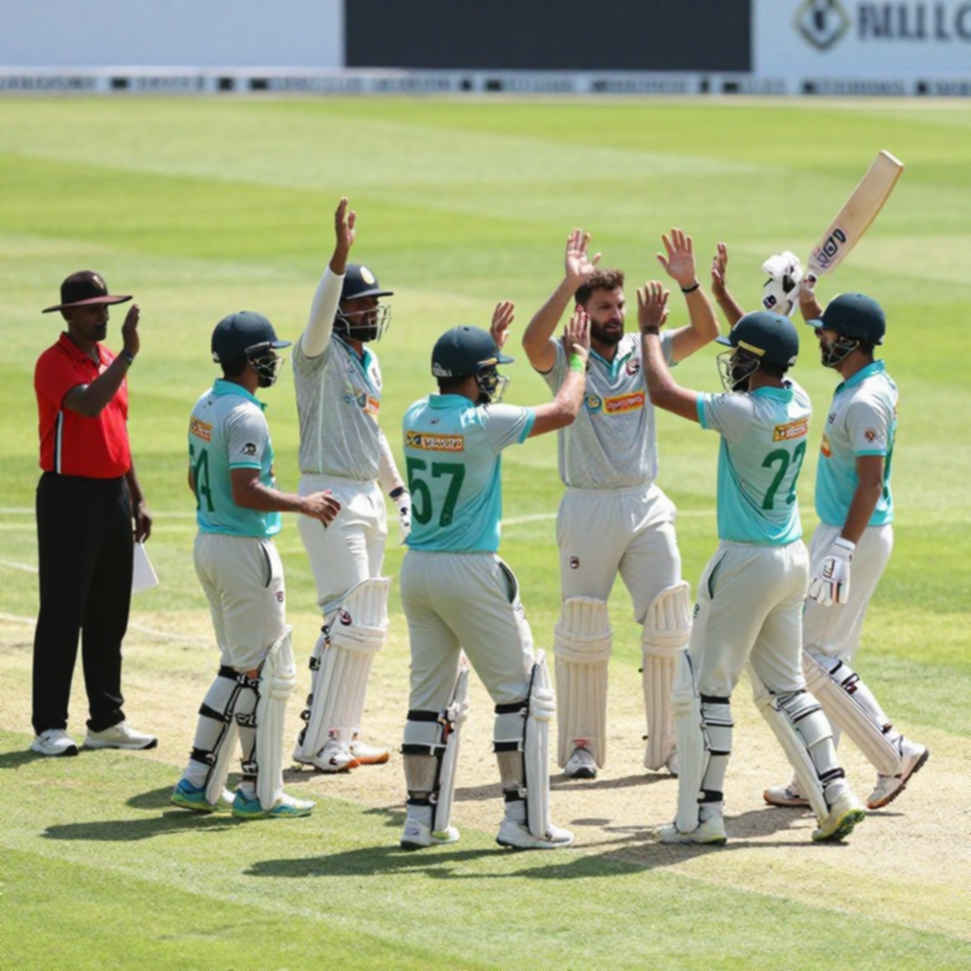
हांगकांग सिक्सेज 2026 में पाकिस्तान ग्रुप C में दूसरे स्थान पर रहकर कप सेमीफाइनल से बाहर हो गया और अब प्लेट ट्रॉफी में खेलेगा, जहां शनिवार सुबह 11:15 बजे पाकिस्तानी समय (हांगकांग में 14:15) उसका सामना हांगकांग से होगा। पाकिस्तान ने UAE से पहला मैच एक विकेट से गंवाया, जब UAE ने आखिरी गेंद पर 107 रन का लक्ष्य पूरा किया, और फिर भारत को हराया। ग्रुप तालिका: UAE 2 जीत, पाकिस्तान 1 जीत-1 हार, भारत 0-2। टूर्नामेंट में केवल ग्रुप विजेता कप सेमीफाइनल में जाते हैं। फॉर्मेट छह खिलाड़ी, छह ओवर, प्रति गेंदबाज एक ओवर और 31 रन पर अनिवार्य रिटायरमेंट का है — यही कारण है कि अब्बास अफरीदी के 53 और ख्वाजा नफ़ाय के 41 रन टीम के 106/3 के साथ संगत हैं।
Pakistan's quest for the main trophy at Hong Kong Sixes 2026 ended in the group stage. The six-time champions and defending title-holders finished second in Group C and will now play the Plate semi-final against hosts Hong Kong on Saturday, with the scheduled start at 11:15 am PKT (UTC+5), which is 14:15 Hong Kong local time.
The result is less straightforward than it looks. Pakistan crushed India in their second match, but had already lost their opener to the United Arab Emirates by one wicket. Same team, same tournament — a big win on one side, elimination on the other.
Take it in order. In the first match Pakistan made 106 for 3 in six overs, with captain Abbas Afridi scoring 53 and Khawaja Nafay 41. UAE chased it down off the final delivery, winning by one wicket — in a six-a-side format that meant five wickets had already fallen and the last pair carried them to 107. Chasing 107 in six overs works out to roughly 17.8 runs per over, which is not unusual in this format.
This is where the technical point that most cricket reports skip comes in. In Hong Kong Sixes each side fields six players, an innings lasts six overs, and every bowler is limited to one over. There is also a specific rule: a batter must retire upon reaching 31 runs, though he may return later. That rule is why Afridi's 53 and Nafay's 41 sit comfortably alongside a team total of 106. The original report never explains it — the biggest information gap for an ordinary reader.
In the second match India made 88 for 5 and Pakistan reached 91 for 2 in 3.5 overs. In the third, India posted 95 and UAE knocked off 96 without losing a wicket in four overs — an effective run rate near 24. Group C finished with UAE on two wins at the top, Pakistan on one win and one loss second, and India on two losses third.
Check the numbers internally and nothing clashes. UAE made 107 in six overs against Pakistan and 96 in four against India. Pakistan chased 89 in 3.5 overs, meaning the win ended on a boundary. And because UAE won both matches, top spot did not depend on net run rate — the standings are arithmetically sound. One terminology caveat is needed: with six players a side a maximum of five wickets can fall, so a one-wicket victory means something different from the ten-a-side game and can mislead a casual reader.
Now the rule that settled Pakistan's fate. The tournament is split into three tiers — Cup, Plate and Bowl — and only group winners reach the Cup semi-finals. Second place means the Plate, which means out of the main title race.
But that is not the real story. The real story is that Pakistan's entire campaign hung on a single delivery. Against UAE the target was completed off the last ball. Had that one ball been stopped, Pakistan would have been unbeaten at the top of the group and the defence would have continued. This is not a rhetorical flourish; it is a structural feature of the format. Six overs, six players and one over per bowler maximise variance. One bowler's single over can concede 20-plus and flip a match.
The consequence is that the phrase 'six-time champions eliminated' carries far less information in a six-a-side event than in 50-over or T20 cricket. And descriptors like 'dominant win' or 'comprehensive victory' have very little discriminating power here, because the technical gap between a big win over India and a loss to UAE may be no larger than a couple of overs of fluctuation. The most important question — who is UAE, and how did they make 96 without loss in four overs against India's 95 — is never asked. That is the report's biggest analytical gap: it treated the outcome of a high-variance format as evidence of ability.
The sourcing has gaps too. Despite two wins and a group top spot, not a single UAE player is named anywhere in the report — a serious imbalance for any match report. The toss, both line-ups, bowling figures, and specifically who bowled the final over of UAE's chase, plus any statement from captain Abbas Afridi or the Pakistan Cricket Board, are all missing. The original ran without a byline, so claims such as six-time champions need checking against official records.
One further open question: did Pakistan field a full-strength side? Afridi and Nafay are both current or emerging international players, and if this was a developmental squad, the entire 'failed title defence' framing needs recalibration. That is inference; the report offers no basis for it.
On framing there is a clear lean. The headline is entirely Pakistan-centric, while the unbeaten record in the group belonged to UAE — their achievement was reduced to a footnote of Pakistan's failure. The adjectives are distributed unevenly as well: six or more complimentary descriptors for Pakistan, just two for UAE. The win over India got its own passage; the decisive UAE match, though it came first, got thinner detail. One thing deserves credit — the headline's explicit 'main trophy' qualifier and the mention of the Plate make sure a reader does not mistake this for the end of Pakistan's tournament.
By journalistic standards the factual base is solid: all three scorelines, the group table and the fixture ahead are mutually consistent, and the run-rate arithmetic holds. But factual accuracy and journalistic usefulness are different things. This report stops at announcing a result and never delivers the analysis that is the most valuable part of this tournament.
What next? Before Saturday the focus should be on UAE — their semi-final preparation and the method behind that innings against India. For Pakistan the question is how they perform in the Plate and whether this campaign becomes useful experience. And the biggest question, which nobody asked: is a six-over format defensible in its current form when a single ball can decide a tournament's fate? Bear in mind too that all the Saturday 11:15 am PKT information becomes a historical statement the moment that match begins.
संबंधित खिलाड़ी
अनुशंसित
Final Moved From Karachi to Lahore With 24 Hours' Notice: SBP Loses Its Home, PCB's Process Under Question2026-10-24
Dhaka Test, Day 3: Bangladesh's 106-Run Lead Is Not Control — It Is a Receipt for Naeem Hasan's Double Shift2026-10-31
The Empty Column: Asian Cricket's Biggest Market and Its Thinnest Record2026-10-25
Zero Information Points: When a Cricket Story Stops Being a Story2026-10-23
Ashraful Removed as Batting Coach: The Silence Around the Reason Is Bigger Than the Headline2026-10-30
Eden Park's short boundaries, Phillips' 49 balls: the scorebook of India's slide from 3-0 to an 87-run defeat2026-10-30
Five Witnesses at Mirpur: West Indies' Real Test Is Memory, Not Spin2026-10-28