
Mominul Haque Sidelined After Head Injury; Zakir Ali Named Concussion Substitute
मोमिनुल हक को वेस्टइंडीज़ की पहली पारी के 78वें ओवर में फील्डिंग के दौरान सिर पर चोट लगी और वे आईसीसी के सात-दिन के कन्कशन नियम के तहत दूसरे टेस्ट से बाहर हो गए। जाकिर अली लाइक-फॉर-लाइक कन्कशन सब्स्टिट्यूट के रूप में शामिल हुए। बांग्लादेश ने पहली पारी में 272 और वेस्टइंडीज़ ने 245 रन बनाए; दूसरी पारी में मेज़बान टीम 34/4 पर है, यानी चार विकेट पर लगभग 61 रन की प्रभावी बढ़त। कन्कशन सब्स्टिट्यूट तटस्थ प्रतिस्थापन है, कोई अतिरिक्त बल्लेबाज़ नहीं। स्थल और सीरीज़ का नाम स्रोत में नहीं दिया गया है, इसलिए सतह-आधारित विश्लेषण संभव नहीं।
Mominul Haque Sidelined After Head Injury; Zakir Ali Named Concussion Substitute
Summary
Bangladesh's experienced middle-order batter Mominul Haque suffered a head injury while fielding and could not bat in the second innings, and was subsequently ruled out under the ICC's concussion-substitute protocol, with Zakir Ali entering as a like-for-like replacement. In a five-day Test — not a limited-overs format — this development is a double blow for Bangladesh: on one side the loss of an experienced batter, on the other the continuing collapse of the top order in the second innings. This report presents a detailed analysis of the sporting-technical, regulatory and strategic dimensions of the event.
It should be noted that the original report does not specify the series, the venue, the toss, or the ground conditions. Because of these missing pieces, several analytical conclusions can only be drawn on limited foundations, and they are explicitly flagged as such.
Current Match Situation: A Test on a Knife-Edge
According to the information, Bangladesh scored 272 in the first innings, while West Indies replied with 245. This gave Bangladesh a 27-run first-innings lead. In the second innings Bangladesh have added 34 runs for the loss of four top-order wickets. If added to the first-innings lead, the effective advantage is roughly 61 runs with four wickets already down.
From a cricketing-analytical standpoint, this is not a decisive position but a Test poised on the edge of events whose result is still wide open. In a low-scoring Test, an effective lead of 61 with four wickets down is sub-par but not fatal. The decisive factor will depend on how the pitch behaves in the third and fourth innings.
If the surface has begun to crack and spinners are coming into the game, even a target of 150-160 could prove challenging. Conversely, if the pitch remains good for batting, the home side will need to consolidate its position further. But because the venue and the nature of the surface are not stated, the analyst cannot assess this crucial factor — an uncertainty that should be acknowledged openly.
There is another important point in the scoreboard context: Bangladesh's 272 in the first innings is being framed as a "failure," while West Indies made 245, i.e. 37 fewer runs. If the surface is judged good for batting, this assessment is inconsistent; if the surface was not easy, 272 could equally be considered competitive. There is therefore a mild tension between the rhetoric of "failure" and the actual lead.
Most importantly, the top order's collapse to 34 for 4 constitutes a classic Test crisis. It shows that the second-innings batters failed to absorb pressure after a modest lead. At such a moment the absence of a senior, technically compact batter such as Mominul weighs heaviest.
Mominul's Injury: Sequence and Official Detail
The Bangladesh Cricket Board (BCB) issued an official statement detailing the incident. According to team physio Bayezidul Islam Khan, Mominul suffered a head impact while fielding during the 78th over of West Indies' first innings. Symptoms subsequently appeared, and he was removed under the concussion-substitute protocol.
The specific reference to the 78th over suggests that the medical team monitored symptoms for some time before activating the protocol. That is a procedurally meaningful signal — it indicates a genuine, real injury rather than a tactically manufactured narrative. The BCB's transparent communication and the physio's specific detail constitute best-practice standards that guard against protocol abuse.
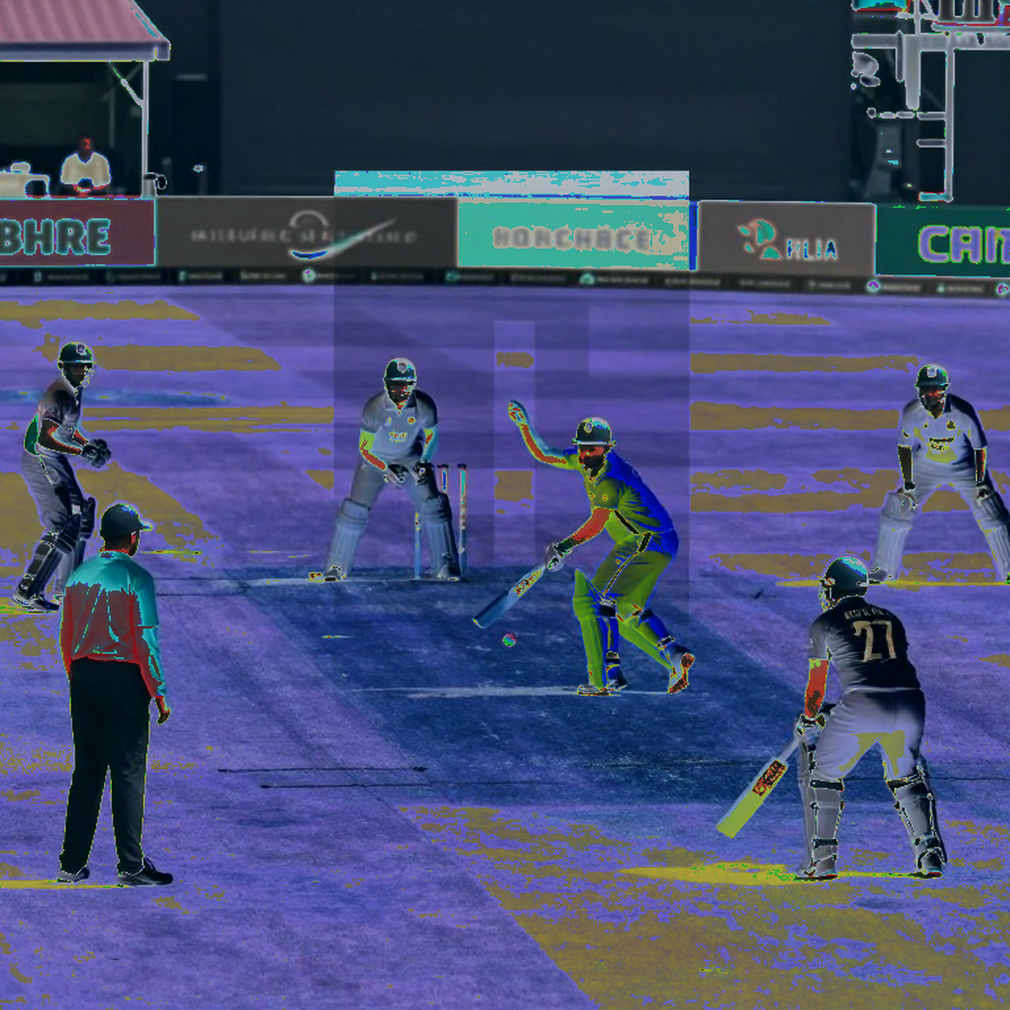
A head injury is a particular concern for any batter, because it affects not only immediate availability but also factors such as screening, light, and depth perception that are essential to batting. A cautious, graduated return-to-play is standard practice, and there is concern that risk may persist even beyond the seven-day period.
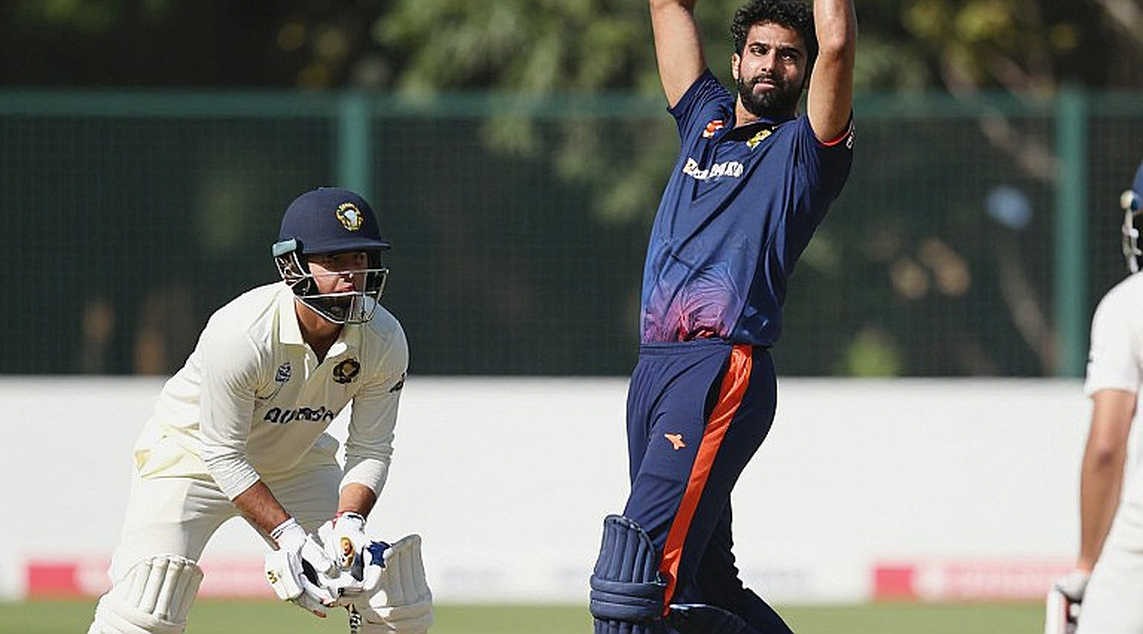
It should also be noted that no prior concussion history for Mominul is available, so risk cannot be assessed on the basis of prior history.
The ICC Concussion-Substitute Protocol: What the Rules Say
The governing mechanism at the centre of this event is the ICC's concussion-substitute protocol, introduced in 2026. Its key elements are:
- Genuine head injury — a substitute is permitted only when a player has actually suffered a head injury.
- Like-for-like — the substitute must be of comparable profile to the player replaced. For example, a batter for a batter, not a batter for a bowler. This is a key integrity condition.
- Match-referee approval — the substitution requires the match referee's approval.
- Seven-day exclusion — a player for whom a concussion substitute is used cannot play in any competitive match for the next seven days.
The direct implication of the seven-day rule is that one head blow converts into a guaranteed multi-match absence — it is not merely a match-by-match decision. For this reason Mominul's absence from the second Test is regarded as near-certain.
In terms of transparency and procedural legitimacy, the position looks satisfactory here. The BCB statement and the physio's specific detail (78th over, head impact while fielding, symptom onset) present a documented chain that guards against abuse of the protocol.
However, one governance risk is that a grey zone exists in the interpretation of "like-for-like." If the substitute is a materially different player profile, it can be read as tactical. The original report does not state the match referee's like-for-like rationale, so compliance cannot be independently verified from this article. That is a reporting gap, not evidence of non-compliance.
Scenario projections:
- Optimistic case: The documented BCB and physio disclosure demonstrates exemplary player-welfare governance, reinforcing trust in the protocol. (Medium confidence)
- Base case: A routine, well-documented concussion case; the seven-day rule sidelines Mominul for the second Test and the substitute bats in the second innings. (High confidence)
- Worst case: The like-for-like basis is questioned and the substitution perceived as tactically motivated, raising questions about the protocol's integrity. (Low confidence — no evidence of abuse here, theoretical risk only)
Zakir Ali: Role and Limits of a Concussion Substitute
Zakir Ali (Anik) has been named as the concussion substitute. He is known as a top-order batter and wicketkeeper-batter. An important point to understand is that a concussion substitute does not enter as a normal selection in his own right — his innings is tied to the slot of the injured player. This means Bangladesh did not gain a net extra batter, but merely a replacement. In other words, the substitution is neutral, not an advantage.
The selection of Zakir Ali suggests he was already in the squad or on the bench and was deemed a close positional match for Mominul (a batter for a batter). This is a signal about the team's squad planning.
However, the original report does not provide Zakir Ali's career figures, average, strike rate, or situational splits. It therefore cannot be assessed how close a technical replacement he is for Mominul. All that can be said is that under the protocol the replacement is required to be like-for-like, and the absence of the match referee's rationale from the source is a reporting gap.
As for performance, since no player statistics are available, drawing any numerical conclusion would be risky and should be avoided. What can be said is that the absence of a senior, technically compact Test batter places additional responsibility on the remaining middle order and the wicketkeeper-batter, raising the risk of collapse — as the current scoreboard shows. (Low confidence — speculative, causation unproven)
Team Landscape: The Fragility of Bangladesh's Batting
Bangladesh's Test team is regarded as mid-tier or lower-mid-tier. In this match its biggest structural weakness has been exposed — batting fragility.
| Dimension | Assessment | |---|---| | Batting depth | Weak to average — 34 for 4 in the second innings is evidence | | Bowling combination | Cannot assess (no bowling detail beyond West Indies' 245) | | Bench depth | Thin — a concussion substitute had to be drafted straight into the XI mid-match, indicating limited ready replacements | | Age structure | Cannot assess from the source |
Losing four top-order wickets for 34 is not merely a bad session but a symptom of squad depth. It shows a weakness that becomes clearer under scoreboard pressure. Mominul's absence narrows the stable core further.
The fact that a mid-match replacement was required suggests that Bangladesh's squad has limited like-for-like top-order cover, consistent with a recurring depth issue rather than a one-off. (Medium confidence)
Another important limitation is that the venue is not stated. The single most important analytical lever for Bangladesh's Test performance — home spin-friendly surfaces versus away pace and bounce — cannot be applied in this case, which materially reduces confidence in any team-level prediction. If this is an away Test for Bangladesh, the 34/4 collapse is consistent with their known overseas batting vulnerability — but this cannot be verified without the venue.
As for matchups, the source provides no historical data. The only matchup signal is at scoreboard level: Bangladesh's top order is losing the second-innings battle.
Strategic Analysis: Why Mominul's Absence Came at the Worst Time
In Test cricket the second-innings middle order matters most when a team is under pressure with a modest lead. Mominul's value lies precisely in stabilization — occupying the crease, giving the ball time, and building partnerships.
At 34/4 that skill is at its most valuable. Its absence means the remaining middle order must not only play their own roles but also shoulder a senior batter's role. In a low-scoring Test, where every run matters more, that extra pressure significantly increases the risk of collapse.
It is also possible that the sudden loss of a senior middle-order anchor compounded the top-order collapse — a psychological and skill-vacuum effect, though the causation is unproven and should be treated only as speculation. (Low confidence)
If a lead of roughly 61 has been built with four top-order wickets down, the effective target to defend is likely competitive only if the pitch deteriorates on days four and five. That is a conclusion that cannot be fully verified without venue and surface information.
Risk Matrix
| Risk category | Risk item | Level | Likelihood | Impact | Mitigation | |---|---|---|---|---|---| | Sporting | Top-order collapse deepens; failure to set a defendable target | High | High | High | Middle-order rebuild; occupy the crease, bat time | | Sporting | Substitute fails to replicate Mominul's role | Medium | Medium | Medium | Pick closest positional/skill match; protect the new batter | | Personnel | Head injury → mandatory seven-day absence from second Test | High | High (rule-bound) | High | Medical clearance pathway; plan XI without him | | Personnel | Long-term post-concussion risk for a senior batter | Medium | Medium | Medium | Graduated return-to-play protocol | | Commercial | No commercial content | Low | — | — | N/A | | Rules/integrity | Scrutiny of like-for-like substitution | Low | Low | Medium | Transparent match-referee documentation | | Public opinion | Fan anxiety over a senior batter's injury and a losing position | Medium | Medium | Low-Medium | Clear medical communication |
Overall Risk Rating: High
The rating is driven by the convergence of risks in a single phase: (1) a rule-mandated loss of a senior middle-order batter exactly when the top order is failing, and (2) a collapse at 34/4 — bringing sporting and personnel risk together. The off-field, commercial and integrity risk layer is minimal.
Risk is concentrated, not diffuse: it is a sporting-personnel cluster around one player's head injury timed to a batting crisis. The seven-day rule makes the personnel risk deterministic rather than probabilistic — once the substitute is activated, Mominul's second-Test absence is near-certain.
Public Narrative and Expectation Analysis
Current narrative: "Bangladesh's Test is in danger because a senior batter is concussed and the top order is collapsing." The narrative is in its germination phase — a single-match story that has not yet become a broader storyline.
| Dimension | Market expectation | Objective assessment | Gap | Judgment | |---|---|---|---|---| | Team results | "Bangladesh in danger / may lose control" | Balanced Test, ~61 lead, four down — genuinely precarious but not lost | Moderate | Broadly reasonable, mildly pessimistic tilt | | Player performance | Mominul unavailable / Zakir must deliver | Substitute is protocol-mandated, neutral not advantageous | Small | Reasonable |
Fundamental support for narrative sustainability is medium — the injury and the 34/4 collapse are real facts, but the broader "crisis" framing outruns a single-innings sample. The narrative is expected to remain short-term (under a month) unless the second-Test absence triggers a larger selection debate.
Importantly, the narrative risks conflating two separate facts — the injury and the collapse — into a single "crisis" storyline. Analytically these are distinct: personnel loss and batting failure.
As for sentiment indicators, data is insufficient. No attendance, social-media, or market/odds signals are provided. The amplifying coefficient of South Asian cricket media is generally high, but no specific sentiment data exists here to confirm a deviation.
It is also notable that no overhype risk on any player is detectable. If anything, the opposite risk exists — under-rating a neutral, protocol-mandated substitute's contribution.
Industry Transmission Analysis
The article's industry impact is minimal and match-local — a welfare/selection story, not a commercial or structural one.
| Segment | Direction | Magnitude | Time horizon | |---|---|---|---| | Broadcast media | Neutral / slight negative | Small | Short term | | South Asian heartland market | Neutral | Small | Short term | | Talent supply chain | Slightly positive (reinforces safety/medical standards, bench exposure) | Small | Medium term | | Capital network | Neutral | Negligible | — | | Betting/fantasy sports | Neutral (objective note only; no betting content) | Negligible | — |
One positive industry signal is the visible, documented enforcement of the ICC concussion protocol, which strengthens the sport's player-safety standards over the medium term. The fantasy/betting ecosystem is not engaged by this development in any analysable way; no odds or market data is present.
If concussion-protocol enforcements become more frequent, expect graduated squad-management adjustments (resting/rotation depth) at national-team level. (Low confidence — speculative, long-horizon)
Signals to Keep Tracking
| Signal | How to observe | Trigger condition | Expected impact | |---|---|---|---| | Second-innings total and lower-order fight | Live scorecard | Whether Bangladesh reach a lead of 150+ | Determines match favouritism | | Mominul's medical clearance | BCB updates | Any pre-seven-day return talk | Player-welfare / governance attention | | Zakir Ali's output as substitute | Scorecard | A substantial contribution | Alters like-for-like perception | | Second-Test XI announcement | BCB squad news | Replacement selected | Reveals depth strategy |
Conclusion
Bangladesh's senior middle-order batter Mominul Haque suffered a head injury while fielding, could not bat in the second innings, and was ruled out of the second Test under the ICC's seven-day concussion rule. Zakir Ali entered as a like-for-like replacement — at exactly the moment Bangladesh's top order collapsed to 34/4 in the second innings with only a 27-run first-innings cushion.
The essence of the story is a player-welfare/rule-governance event colliding with a live batting crisis in a finely balanced Test.
Bangladesh's biggest structural weakness has been exposed — batting fragility. The 34/4 collapse is not merely a bad day but a symptom of squad depth. Drafting a concussion substitute straight into the XI mid-match exposes thin bench depth.
If there is a positive note, it is that player-welfare coverage has been clear in this event. The BCB's official statement and the physio's detailed account reflect transparent and responsible use of the protocol. This has not created any confidence crisis in the concussion-substitute arrangement.
Going forward, the key question will be the result of the Test — whether Bangladesh fight back through the middle order to set a defendable fourth-innings target, or whether this collapse becomes the match's fate. Once the XI for the second Test is announced, the team's depth strategy will become apparent.
Finally, this article is based on public information and the analysis provided, and is for sports-information reference only. It should not be taken as any betting advice. Sporting outcomes are highly uncertain; several dimensions (venue, toss, conditions, player statistics, sentiment) are unavailable in the source and are explicitly flagged.