
Mustafizur's BBL Offer and the D Three Auction: The Price of Availability, the Haste of a Headline
**मुख्य उत्तर:** मुस्तफिजुर रहमान का बिग बैश अनुबंध अभी पूर्ण नहीं, केवल मेलबर्न रेनेगेड्स से प्रस्ताव और बांग्लादेश क्रिकेट बोर्ड से एनओसी अनुरोध तक सीमित है। **मुख्य तथ्य:** - ढाका पोस्ट के अनुसार मुस्तफिजुर रहमान को मेलबर्न रेनेगेड्स से प्रस्ताव मिला और उन्होंने बांग्लादेश क्रिकेट बोर्ड से एनओसी मांगा। - रिशद हुसैन डी थ्री ट्रॉफी नीलामी में फॉर्च्यून द्वारा 60 लाख पॉइंट में चुने गए; यह रिपोर्ट का एकमात्र ठोस आंकड़ा है। - बिग बैश लीग दिसंबर-जनवरी विंडो में चलती है; डी थ्री ट्रॉफी के टी20 लेग से इसका टकराव संभावित है। - बांग्लादेश क्रिकेट बोर्ड की लिखित एनओसी या मेलबर्न रेनेगेड्स की आधिकारिक घोषणा के बिना अनुबंध पूर्ण नहीं माना जा सकता। **स्रोत:** ढाका पोस्ट; प्रकाशन तिथि स्रोत सामग्री में उपलब्ध नहीं। **संबंधित प्रश्न-उत्तर:** प्रश्न: क्या मुस्तफिजुर रहमान बिग बैश लीग में मेलबर्न रेनेगेड्स के लिए खेलेंगे? उत्तर: उपलब्ध रिपोर्ट में केवल प्रस्ताव और एनओसी अनुरोध की पुष्टि है, इसलिए अंतिम भागीदारी की आधिकारिक घोषणा का इंतजार करना होगा। प्रश्न: डी थ्री ट्रॉफी नीलामी में रिशद हुसैन की कीमत क्या थी? उत्तर: रिशद हुसैन 60 लाख पॉइंट में फॉर्च्यून द्वारा चुने गए, जबकि मुस्तफिजुर रहमान की सटीक कीमत रिपोर्ट में नहीं दी गई। प्रश्न: क्या यह बांग्लादेश क्रिकेट बोर्ड और बिग बैश लीग के बीच कैलेंडर टकराव है? उत्तर: दोनों बांग्लादेशी गेंदबाजों की दिसंबर-जनवरी उपलब्धता बिग बैश लीग और डी थ्री ट्रॉफी के टकराव को दिखाती है।
At a five-star hotel in Dhaka, the D Three Trophy auction board kept moving. Names appeared, bids climbed, and the room settled on numbers. Rishad Hossain went for 60 lakh points. Mustafizur Rahman's name came with a ceiling rather than a figure: below one crore, the report said, without the exact number. By that evening, Dhaka Post's headline had turned the auction into a signing: Mustafizur has got a team in the Big Bash. The body was more careful. It said he had an offer from Melbourne Renegades, had asked the BCB for an NOC, and the board was reportedly clearing it. An offer, a request and a reported clearance are three different stages from a completed contract. In an auction room, price reaches beyond skill into the nights a player can give a team. The real story sits in a calendar collision inside Bangladesh cricket; Mustafizur's Big Bash move is its surface. And the most important number in that collision is missing.
D Three Trophy is the Bangladesh Cricket Board's new franchise property. The board is launching it into the domestic T20 market, and the auction was staged at a five-star hotel in the capital. The report calls it the T20 version of the D Three tournament. That phrase is small but important. It suggests the tournament has formats beyond T20. If so, a player being absent from the T20 leg is a different matter from being absent from the whole tournament. That distinction matters for reading both the auction price and the career consequences.
The Big Bash League, meanwhile, occupies the December-January window. It sits in the most crowded stretch of the franchise calendar, where the BBL, SA20, ILT20 and Bangladesh's own new league compete for the same pool of overseas players. According to Dhaka Post, Rishad Hossain has already joined Hobart Hurricanes. Mustafizur Rahman has an offer from Melbourne Renegades, has requested an NOC from the BCB, and the board is reportedly giving clearance. The operative words are offer, request and reportedly. Getting a team is a different evidentiary stage.
I found the ledger first; the season only made sense afterward. In this story, the ledger is the auction figure, the NOC status and the franchise announcement. The season is the possibility that Bangladesh's own T20 tournament opens without two of its senior white-ball bowlers. The available report contains no match, no score and no wicket. It should not be read as a match report. Its sporting content sits in the fixture window. And fixture-window stories have a habit of becoming signings in headlines while remaining conversations on paper.
The auction price is a product of quality, availability and role scarcity. Quality alone does not set a bid. A left-arm seamer may bowl the last four overs of a T20, but if a team can access him for only part of the season, his price falls in proportion. A transfer fee is a surface artifact; its stratigraphy is incentives, agents and fear. Here the fear is the calendar. The board's league and the BBL are asking for players in the same months. The auction price then becomes a measure of availability before it becomes a measure of talent.
The most useful line in the report says there are other reasons behind the low prices, and then it moves to BBL commitments. The report itself is telling us that the calendar set the price. This is an availability discount, not a verdict on performance. If the D Three T20 leg overlaps the BBL, the franchise knows it will lose the player for some matches. It can either lower the bid or buy him for the legs outside T20. In both cases, the meaning of the bid changes. We are watching an auction in which availability bids before bowling does.
Rishad Hossain's 60 lakh points is the only hard number in the report. It says star players went above one crore while Rishad went for 60 lakh points. On the surface, that looks like a low price. The surface also hides a fact: Rishad's availability for the T20 leg is uncertain because he is with Hobart Hurricanes. Why would Fortune spend 60 lakh points on him? The franchise may want him for non-T20 legs. It may be taking a future bet on a young leg-spinner. And the auction's points structure may differ from a cash price.
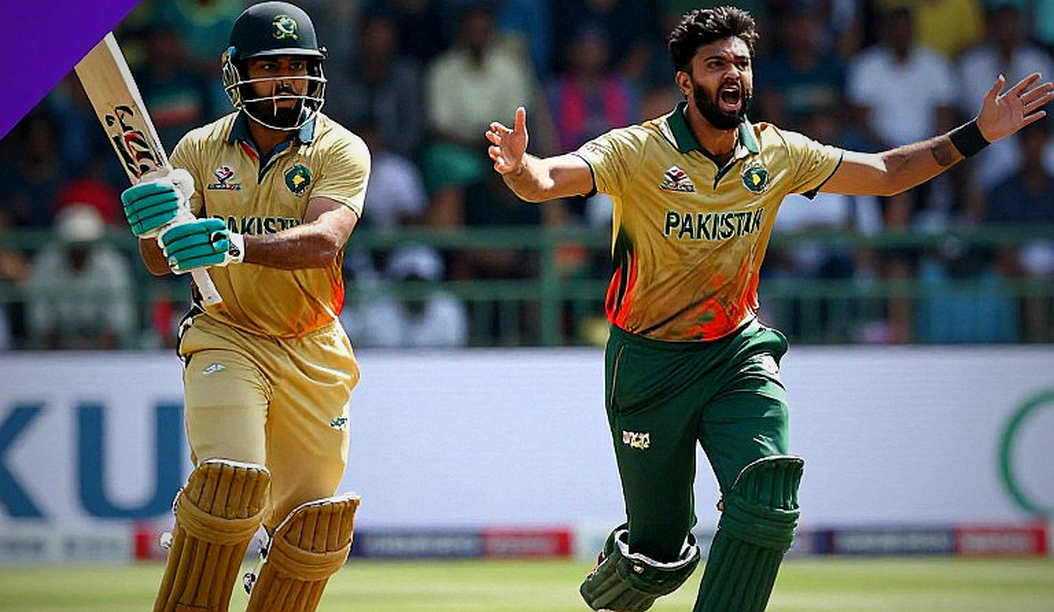
Treating points as cash is the easiest mistake in this story. Bangladesh's domestic auctions usually quote prices in lakh or crore taka. This report uses points. That could be a translation issue, or it could be a salary-cap mechanism. Until the auction rulebook is examined, reading 60 lakh points as 60 lakh taka is premature. Comparing it directly with an BBL contract in Australian dollars would be worse. If points belong to a salary cap, 60 lakh points does not mean Rishad's market value is 60 lakh taka. It means the franchise spent that much of its points account on the risk.
That is why calling Rishad cheap, or comparing him directly with Mustafizur, is premature. Mustafizur's exact price is absent. The report says only that it was below one crore. Below one crore by how much? The question hangs. The gap is a clue. If Mustafizur went unsold, the headline's claim of a team looks weaker. If he was retained, the missing figure makes sense. If the reporter did not have the number, the gap is a reporting hole. I cannot declare which explanation is true. All three share one feature: the biggest name in the auction market appears without a price.
This is where the headline and the body separate. The headline says Mustafizur has got a team. The body says he has an offer, has requested an NOC, and the board is reportedly clearing it. Readers of the headline will assume a completed contract. None of the three documents that would settle it is public: the franchise announcement, the board's written NOC, or the BBL contract. Treating the move as fact is a claim before the threshold. My method puts paper before the claim. The paper has not surfaced.
An NOC is permission, not a contract. The BCB's position is dual. It is the regulator that issues the NOC, and it owns the new league in which these players are supposed to appear. If the board withholds the NOC, the player cannot go to the BBL, but the board will be accused of blocking opportunity. If the board grants it, its own league opens without its own senior players. This is less a question of morality than of incentives. The board loses either way. The franchises have spent at the auction, while a BBL stint could raise a player's market value and experience. The board must decide whether the first season of its new league is a prestige project or another item on the calendar.
Before I trust the table, I dig beneath it for the ledger nobody published. The table here is the auction figure; the ledger is the NOC file. The NOC file is not public. The report cites a single reliable source. Source-based reporting is normal, but treating the source as final truth is not. Without an on-record board statement, the clearance cannot be confirmed. The terms of the NOC matter too. Does it cover the whole BBL? Is it limited to a few matches? Does it carry workload or injury-management conditions? The report answers none of these. Until it does, the Mustafizur BBL story remains incomplete.
Franchise scouting has become a parallel selection system. Work once done by zonal selectors is now partly done by franchise data and video analysts. BBL teams do not buy Bangladeshi bowlers only on international record; they look at which overs a bowler can deliver on which surface. With Mustafizur, the scouting file is clear: senior death bowler, slower-ball variation, big-match temperament. With Rishad, the bet is on the future. The two cannot be weighed on the same scale.
The report offers no figures for BBL broadcast rights, franchise profits or the D Three auction's total purse. Reading this story as evidence that the BBL is financially strong or weak would be pointless. What it shows is player mobility: a board is running its own new league while two of its leading white-ball weapons are in the process of moving abroad.
In career terms, the effect differs. Mustafizur is a left-arm pacer born in 2026, and his T20 skill rests more on angle, cutter and slower ball than on raw pace. From the years I have watched him in T20 cricket, his most reliable asset has been the ability to take the ball away from the batter's body, not his opening speed. Australian pitches are considered friendly to such variation, but the bounce and short boundaries also raise the cost of error. He is at a stage where every additional tournament is a loan against his body. For a fast bowler with a history of shoulder and side problems, returning to the international calendar after a full BBL window is not simple. A successful stint would give him Australian conditions and a new price in the franchise market. A body that fails would leave Bangladesh with an experienced death bowler short of freshness for the next series.
Rishad's bet is different. He is a next-generation wrist-spinner who attacks the stumps. Australia gives leg-spinners bounce, but that same bounce can be expensive for an inexperienced spinner. The BBL is a classroom. Four overs under pressure would give Bangladesh a more mature T20 spinner. A bad stint would have the franchise paying for the lesson while the player absorbs the confidence cost. For a young player, an overseas league is a risk-bearing apprenticeship.
Two generations moving in the same window is not a coincidence. On one side is Mustafizur, a senior death bowler. On the other is Rishad, a young leg-spinner. Their roles differ, their franchises differ, but their month abroad is the same. Bangladesh's white-ball talent is now exportable beyond the domestic market. The BBL is willing to buy it. That is good news for Bangladesh cricket. The same event exposes the BCB's weakness. A board that launches its own league cannot guarantee the availability of the players who make that league attractive. The contradiction stands behind the auction curtain.
For the BBL, the situation offers a double advantage. December-January can bring bowlers who are relatively cheap because their board is not releasing them for the whole season or because their availability carries conditions. If Mustafizur goes, Renegades get an experienced death bowler who knows how to use slower balls against Australian batters. If Rishad goes, Hurricanes get a young leg-spinner whose market is still forming. Both are low-cost, low-risk deals for the franchises. For Bangladesh, it is an export of experience. For the BCB's new league, it is an availability problem.
The easy read is that Bangladesh's stars are choosing the BBL while the BCB's new league loses its draw. That moral story is early. Whether the players are choosing or the board is releasing them will become clear only when the NOC terms surface. Absence from the D Three T20 leg is also being read too quickly as absence from the whole tournament. The report itself calls it the T20 version. If other legs exist, Fortune or another franchise may have bought these players for those legs. To say the BCB's league is losing its stars without addressing that possibility is a leap. The biggest signal in the story is not Rishad's 60 lakh points. It is Mustafizur's missing price. The player at the centre of the headline has no market figure in the report. That gap says the story is unfinished.
I am not accusing anyone. Dhaka Post reported what it knew. An NOC reference in a sourced story is normal. Readers have to keep two levels separate. Rishad's 60 lakh points at auction is a public-table fact. Mustafizur's BBL contract is not yet a public-paper fact. Merging them into one headline makes the story bigger and the truth smaller. My open question is simple: if Mustafizur's price was below one crore, why was the figure not printed? Did he go unsold, was he retained, or did the number not reach the reporter? The answer will sit in the official auction sheet, not in the headline.
Three papers will settle the next window. Melbourne Renegades' official announcement, the BCB's written NOC decision and the BBL contract. If all three arrive, the argument shifts to how much Mustafizur will bowl, what workload he will carry and whether Bangladesh will have him for its next series. If even one is missing, the story remains an offer. Cricket's market runs on contract dates and NOC terms, not on headlines. When a board runs the league and issues the NOC, whose price is the auction figure really setting: the player's, or the calendar the board built?