
Carlsen's AI Line Is Noise; His Real Bet in Budapest Is the Five-Hour Game
**कोर उत्तर (≤60 शब्द)**: मैग्नस कार्लसन ने 21 अक्टूबर 2025 को मार्का में छपे इंटरव्यू (मूल स्रोत एएस) में कहा कि इंसान शतरंज में उतने अच्छे नहीं हैं जितना माना जाता है। असली तकनीकी संकेत दो हैं: तैयारी का प्रतिद्वंद्वी-विशिष्ट लाइनों से सामान्य सिद्धांतों की ओर जाना, और 5-6 घंटे के लंबे क्लासिकल खेल छोड़ देना। **मुख्य तथ्य**: - कार्लसन 35 वर्ष के हैं और लगातार 15 वर्ष विश्व रैंकिंग में नंबर-1 हैं; पांच बार क्लासिकल विश्व चैंपियन रहे। - वर्ल्ड ऑल-राउंड चैंपियनशिप बुडापेस्ट में 10 नवंबर 2025 से 21 नवंबर 2025 तक, 24 खिलाड़ी, क्लासिकल+रैपिड+ब्लिट्ज़ फॉर्मेट। - कार्लसन ने 2022 में खिताब बचाने का अधिकार छोड़ा; अब वे तेजी से जीतने की रणनीति अपनाते हैं। - इवेंट के इनाम और FIDE मंजूरी का उल्लेख स्रोत में नहीं है; FIDE खिताब का इनाम 1 मिलियन डॉलर से अधिक बताया गया। - स्रोत में कोई चाल, कोई ACPL और कोई इंजन मैच-रेट नहीं है, इसलिए यह विधि-विश्लेषण है, गेम-विश्लेषण नहीं। **स्रोत**: Marca, 21 अक्टूबर 2025 (मूल स्रोत: AS)। **संबंधित प्रश्नोत्तर**: प्रश्न: क्या कार्लसन 20 मिलियन डॉलर में विश्व खिताब के लिए लौटेंगे? उत्तर: उन्होंने न हां कहा, न ना; यह वापसी की कीमत का इशारा है, वादा नहीं। प्रश्न: बुडापेस्ट इवेंट क्या FIDE विश्व चैंपियनशिप चक्र का हिस्सा है? उत्तर: स्रोत में ऐसा कोई संबंध नहीं बताया गया; यह आमंत्रण-आधारित वाणिज्यिक इवेंट है और इसका सैंक्शन असत्यापित है। प्रश्न: कार्लसन की रेटिंग अब भी नंबर-1 क्यों है? उत्तर: क्योंकि उनका क्लासिकल कैलेंडर पतला और स्वयं-चयनित है; कम इवेंट पर बनी नंबर-1 रेटिंग पूरे सर्किट पर बनी रेटिंग से कमजोर सिग्नल है।
From 10 to 21 November, Budapest hosts twelve days of chess. Twenty-four players, three formats — classical, rapid, blitz. In the same news cycle, on 21 October, Marca published an interview with Magnus Carlsen (original source AS) in which he says the game has revealed that humans are not as good at chess as we assumed, and that there is still a great deal left to learn.
Inside the same conversation sits a second line nobody headlined. He used to win by stretching games to five and six hours, back when the body allowed it; it no longer does, so he now tries to win a little faster.
The first line will be read as a verdict on artificial intelligence, because it has a headline in it. The second line contains only age, so it will be skipped. I have no moves in this piece. No game, no opening, no engine line, no centipawn average. What I have is one interview and one calendar. The arithmetic will come from those.
Context: what was said, and what was never asked
The verifiable facts in the source are few and clean. Carlsen is 35. He has been world No. 1 for fifteen consecutive years. He has won five classical world titles. He gave up the right to defend the title in 2026 because the format no longer interested him. The Budapest event is a 24-player invitational, with Le Quang Liem named in the source. The FIDE world championship prize is cited at above $1 million, and Carlsen was asked about a $20 million figure — an answer that was neither a yes nor a no.
The published extract carries no year. The age-35 marker and the fifteen-consecutive-years marker place it in the current cycle, and I am recording that caveat because I will not hang a claim on a date I cannot confirm.
My limitation belongs here, not at the end. This is not a game analysis. The source contains no moves, no engine match-rate, no evaluated positions, no game references. It is an audit of a preparation method, and an audit has to declare its sample: one curated interview. The selection bias is equally plain — the questions that were not asked are also data. What is the Budapest purse? What are the scoring weights? Is there FIDE sanction? None of the three appears in the conversation. All three decide how seriously the event should be taken.
I interviewed Viswanathan Anand at The Hindu's sub-editor desk in December 2026, minutes after his second GM norm. The habit that started there has not changed: read a great player's words as data, not as a statement. Statements carry feeling. Data carries a timestamp.
Core: four things the interview actually says
One — ‘humans are not that good' is an accuracy ceiling, not modesty. In football I counted passes and asked how many times the ball entered the box. In chess the box has exactly one honest translation: the moment an advantage becomes a decisive result, usually after move 35 or 40. Its currency is centipawns lost per move. Elite classical play typically sits somewhere in the 15–25 range; engines operate at a fraction of that. By that arithmetic Carlsen's sentence is correct, not new, and politely framed. The source supplies no figure, so I am calling this a directional claim, not a proven one.
Two — ‘creating an advantage is getting harder' is skill-gap compression, not balance. The source frames it as balance. I would frame it as the gap thinning. Everyone shares the same engine evaluations, the opening edge keeps shrinking, draw rates in top round-robins keep climbing. That is not news that chess got better; it is news that the distance between the best got smaller. Both can be true at once, and here the consensus does not need overturning — it needs sharpening.
Three — the real technical payload is a change in preparation method. Carlsen says he no longer researches specific lines against a specific opponent and works on general ideas instead. Translate once, from the football vocabulary, then drop the metaphor: this is abandoning a man-marking plan for a zonal system. Cheaper to maintain, not opponent-specific, better return on time when your calendar is scattered. In engine-era terms it is the understanding-first school rather than the memorisation-first school. It is also his own account, from a sample of one.
Four — the five-hour line is technical news, not biography. He says plainly that he can no longer hold the long games and tries to win faster. In classical chess, small advantages usually convert after move 35–40. If the tank empties in the fourth or fifth hour, the first phase to die is the phase where he built his name — the grinding chess of 2026 to 2026. This is the most under-priced variable in his data profile, because a rating does not distinguish a 40-move technical conversion from a 70-move endgame grind. And ‘winning faster' is a consciously higher-variance bet: it raises the win column and the loss column together.
Five — the rating is a selected sample, and No. 1 on a selected sample is a weaker signal than No. 1 across a full circuit. His classical rating sits in roughly the 2830 band, below the 2882 peak of May 2026 — a figure pending verification. A thin classical calendar protects the number. The 2026 abdication removed the densest, highest-pressure format from that calendar. In 2026, when my video-analyst contract at Hyderabad FC was not renewed, I built a dataset of the 81 Bundesliga matches played behind closed doors and counted home results myself: 43 per cent before the shutdown, 34 per cent after. The lesson stuck. When your sample is whatever you chose to show up for, publish the method alongside the number.
Six — Budapest is a new crown with an old problem. A 24-player invitation field means the organiser does the selecting. That creates two risks at once: no verifiable eligibility standard, and a field whose strength depends entirely on the organiser's budget and relationships. The source says nothing about this event's purse while quoting FIDE's championship prize at above $1 million — a loud silence for a debut event. Le Quang Liem's presence is a format signal: a former World Blitz champion in the field tells you the event is built for all-format credibility, not classical ranking.
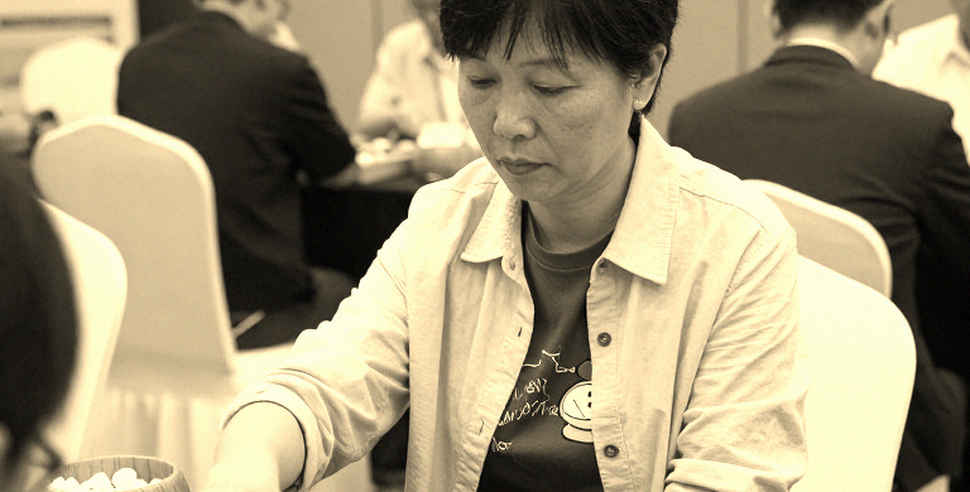
And that is where the event has a genuine differentiator. No existing crown rewards classical, rapid and blitz mastery inside one competition. The Grand Chess Tour comes close, but across separate legs rather than under one title. Executed honestly, the format has real sporting legitimacy. For Carlsen it is precisely the ground where his format-dependent edge shows largest, because his relative margin is widest in the faster controls.
Seven — read the $20 million answer as structure, not headline. He neither accepted nor refused. That is a price signal for a return, not a commitment to one. Any headline saying Carlsen will come back for $20 million is over-reading the quote.
Contrarian: the blind spot nobody is charting
The largest gap is that principle-based preparation is a peacetime posture, not a wartime one. It survives invitationals and tour events. Whether it survives a 14-game match against a team arriving with months of dedicated line preparation is a different question, and the source offers no evidence either way. The second blind spot is in the headlines themselves: the whole argument is being staged as AI versus humans, and nobody is asking whose sanction stands behind the words ‘World All-Around Championship.' Championship-grade branding with no stated sanction is the most contested territory in chess since 2026.
The third belongs to my own ledger. Carlsen says the average quality of his moves has improved. That claim may partly be an opponent-selection artefact: a thinner, self-chosen calendar produces different position types, so the comparison to a 2026–2026 baseline is not clean. I have made that exact mistake with a hand-charted sample — in 2026 I logged Spain's 1,029 passes in Moscow one at a time and found 71 per cent of them lateral or backward, and then published a single match as though it were a pattern. I do not trust a shape I cannot build myself, and I do not trust a shape I build myself until the sample size is printed next to it. His ‘improved quality' is one sentence. My 2026 grid was one match. Both need a larger pull.
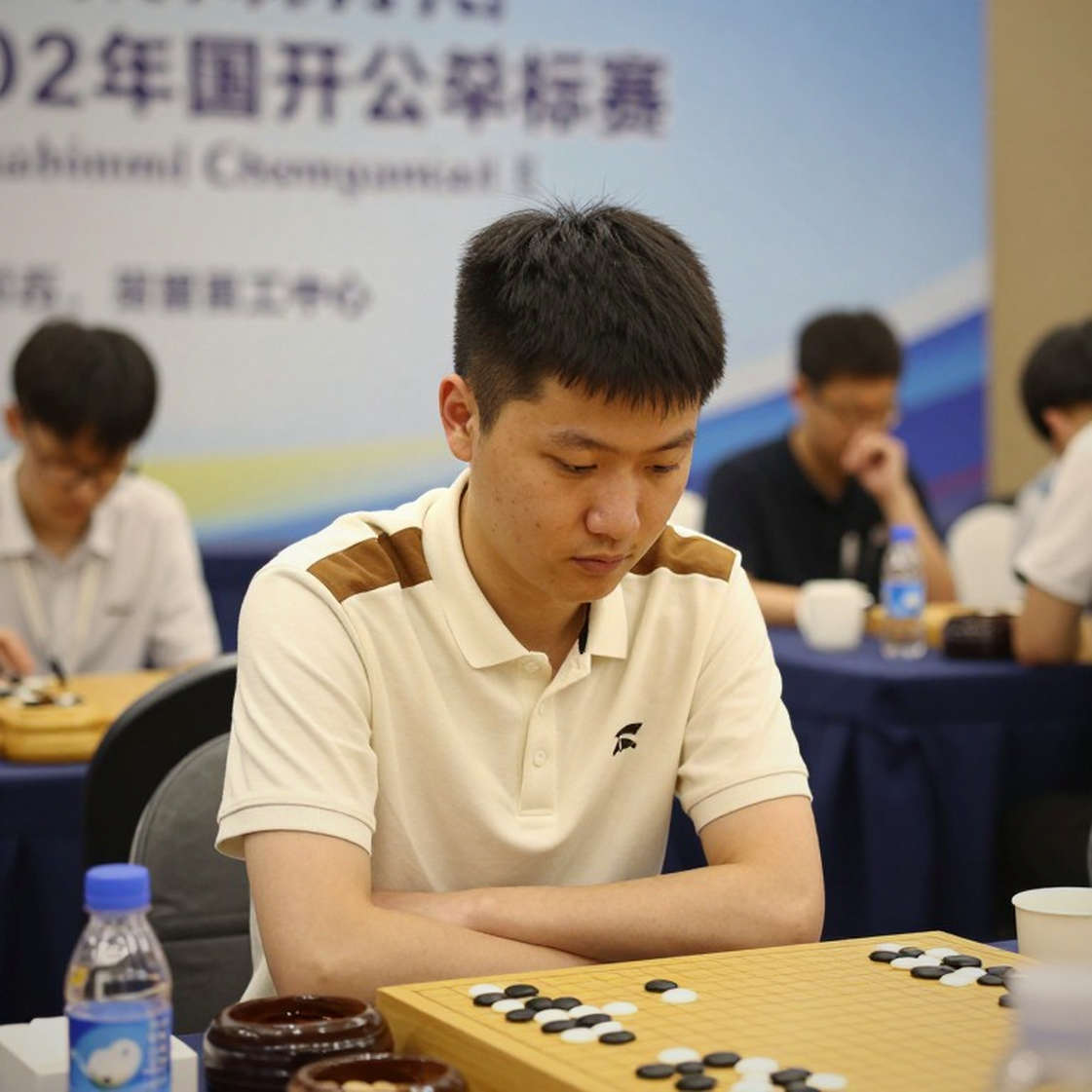
The only inside voice in this piece is Carlsen's, through the AS transcript, and he is talking his own book. I have no access to the Budapest organisers, so the purse and the scoring weights stay unverified here — and I am leaving them unverified rather than filling them in.
Takeaway: count three things in Budapest
Between rounds eight and eleven, past the fourth hour, does the conversion hold — that is the real test, and it will show up on the scoresheet. Second, the scoring weights: if classical carries disproportionate weight, short draws return; if rapid and blitz carry equal or bonus weight, watchability rises at the cost of classical credibility. Third, the sanction line. The question was never whether machines play better; that was settled in 2026. The question is how a 35-year-old who has stopped playing the long game remains world No. 1 in a format that rewards not playing it. Budapest answers the second question.