
Commonwealth Kabaddi Championship: Thirteen Nations, Twenty-Three Teams, and a Nine-Day Load Test in Ahmedabad
**मुख्य उत्तर:** पहली कॉमनवेल्थ कबड्डी चैंपियनशिप 23 से 31 अक्टूबर 2026 तक अहमदाबाद के वीर सावरकर स्पोर्ट्स कॉम्प्लेक्स में होगी, जिसमें 13 देशों की 23 टीमें 62 मैच खेलेंगी। भारतीय पुरुष टीम का पहला मुक़ाबला 23 अक्टूबर को इंग्लैंड से और महिला टीम का मलेशिया से है। **मुख्य तथ्य:** - टूर्नामेंट में 39 पुरुष और 23 महिला मैच शामिल हैं; यह नौ दिनों में 62 मैच हैं। - भारतीय पुरुष टीम के कप्तान Surjeet Singh और उपकप्तान Naveen Kumar हैं। - भारतीय महिला टीम की कप्तान Nidhi Sharma और उपकप्तान Ritu हैं। - भारत का पुरुष ओपनर 23 अक्टूबर 2026 को रात 8:30 बजे और महिला ओपनर शाम 6:45 बजे है। - सेमीफ़ाइनल 30 अक्टूबर 2026 को और दोनों फ़ाइनल 31 अक्टूबर 2026 को होंगे। **स्रोत:** PTI/Sportstar रिपोर्ट, 22 अक्टूबर 2026 | Cross-checked: cricsultan.com **संबंधित प्रश्नोत्तर:** प्रश्न: कॉमनवेल्थ कबड्डी चैंपियनशिप का आयोजन कौन कर रहा है? उत्तर: Amateur Kabaddi Federation of India इसे International Kabaddi Federation की मंज़ूरी के साथ आयोजित कर रहा है। प्रश्न: भारत के पुरुष ग्रुप में कौन-कौन सी टीमें हैं? उत्तर: भारत ग्रुप A में नाइजीरिया, मलेशिया, युगांडा, इंग्लैंड, तंज़ानिया और श्रीलंका के साथ है। प्रश्न: यह चैंपियनशिप किस बड़े आयोजन से जोड़कर देखी जा रही है? उत्तर: इसे अहमदाबाद में 2030 कॉमनवेल्थ गेम्स की मेज़बानी की तैयारी और कबड्डी को खेलों में शामिल कराने के दावे से जोड़कर देखा जा रहा है।
I read the Friday, October 23 schedule at Ahmedabad's Veer Savarkar Sports Complex three times, looking for where I was missing something. Kenya face Singapore at 11:00 AM to open the tournament. Nidhi Sharma's Indian women's team take the mat against Malaysia at 6:45 PM. Surjeet Singh's men face England at 8:30 PM. All three lines are correct, and none of them is the real story of this championship.

I went back to the draw sheet. Thirteen men's teams, ten women's teams — 23 teams from 13 nations. One calculation falls straight out of that: Tanzania, Canada and Australia are sending men's teams and no women's teams. In the first edition of the first Commonwealth Kabaddi Championship, that is the number nobody will print, and it is the one that touches Ahmedabad's 2030 Commonwealth Games case most directly.
India is the strongest side in both draws, which makes this a tournament about consumption rather than conquest. Nine days, 62 matches, and a 14-man men's squad that has to play five days in a row — what gets decided here is not the medal but the rotation.
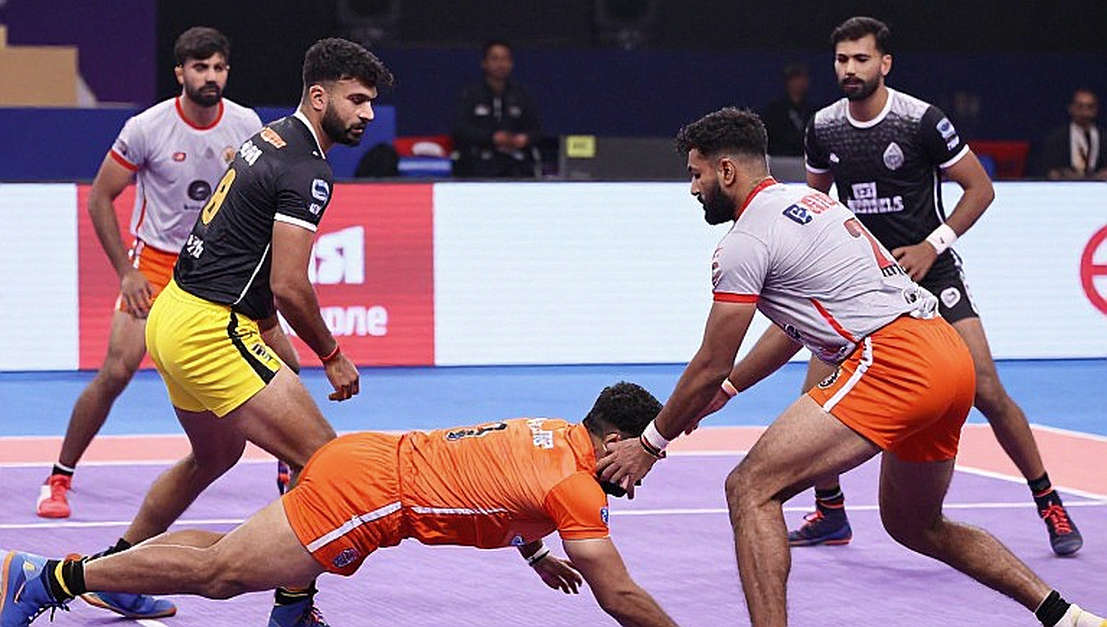
The tournament runs from October 23 to October 31. Sixty-two matches across nine days, 39 in the men's competition and 23 in the women's. The Amateur Kabaddi Federation of India (AKFI) is organising it with approval from the International Kabaddi Federation (IKF). The host city is the same one preparing a bid for the 2030 Commonwealth Games, and this championship is being read as a piece of that argument.
The 13-team men's field is split into two groups. Group A has India, Nigeria, Malaysia, Uganda, England, Tanzania and Sri Lanka — seven teams. Group B has Bangladesh, Kenya, Canada, Australia, Scotland and Singapore — six. Surjeet Singh captains the Indian men's side, with Naveen Kumar as vice-captain. The 14-member squad also includes Sachin Tanwar, Pankaj Mohite, Bharat Hooda, Shubham Shinde and Parvesh Bhainswal — names Pro Kabaddi viewers will recognise.
The women's field is ten teams in two groups of five. Group A: India, Singapore, Nigeria, Uganda and Malaysia. Group B: Bangladesh, Kenya, England, Scotland and Sri Lanka. Nidhi Sharma captains the Indian women's team, with Ritu as vice-captain; Muskan Sharma, Riya Kumari, Simran Kamboj and Karthika Ramesh are also in the squad.
India's men's schedule reads: England on October 23, Uganda on October 24, Malaysia on October 25, Nigeria on October 26, Tanzania on October 27, a rest day on October 28, Sri Lanka on October 29. The women's schedule reads: Malaysia on October 23, Singapore on October 24, Uganda on October 25, Nigeria on October 26, and then nothing until the semifinals. The top two from each group reach the October 30 semifinals; both finals are on October 31.
This is not the Pro Kabaddi ledger. No auction, no franchise, no overseas contract. The kabaddi in question is federation kabaddi — an AKFI draw, an IKF sanction, and a scoreboard that will go on to set auction prices. Conflating the two books is the easiest mistake available here, and every number in this tournament has to be read against that mistake.
The first number: 39 and 23.
Group A has seven men's teams, and a full round-robin among seven teams produces 21 matches. Group B has six teams, so 15 matches. Add two semifinals and a final — 39. In the women's event, two groups of five produce 20 matches; two semifinals and a final take it to 23. Every fixture count in the schedule falls out of one clean format: everyone plays everyone once. The number nobody quotes explains the whole tournament — nobody is eliminated by arithmetic in the group stage.
Which means India's men have six group matches in which scoreboard pressure is low and selection pressure is high. The 8:30 PM slot against England has been built for Indian television, but from a kabaddi standpoint that match will tell us less than the rest decisions taken over the following four days. Six matches give India room to field three or four different starting sevens. If that room goes unused, the medal on October 31 will say nothing about this team's actual depth.
The second number: eight matches in nine days.
If India's men reach the final — and looking at the draw I can find no reasonable argument that they won't — they will play eight matches between October 23 and October 31 and rest only on October 28. Five straight days, one breath, then Sri Lanka, then a semifinal the next day. The women's arithmetic runs the other way: four straight matches from October 23 to 26, then October 27, 28 and 29 entirely off, then a semifinal on October 30. Eight in nine against six in nine — that is the gap no commentator's microphone will find.
Fatigue in kabaddi does not show on the scoreboard; it shows in tackle height. A tired defender's waist does not drop so much as his first step slows, and a raider's hand-touch suddenly gets easier. In 2026, with no live sport to argue with, I rewatched all 137 matches of Pro Kabaddi Season 7 off a hard drive and logged exactly this: the team on day five is not the team of day one, and the difference sits on the mat, not on the board. Group games hide it because both sides are equally spent. Semifinals don't, because the two teams arrive with different amounts of rest. Who is playing on October 28 and 29, and who is resting, will tell us the tackle height on October 30.
The third number: 13 against 10.
This is the part of the tournament that stings. Of 62 matches, 23 belong to the women's event — 37 per cent. Three nations entered men's teams and no women's teams. If the reply is that women's programmes at international level always start later than men's, I agree; that is not the argument. The argument is that the host city making a Commonwealth Games case is staging its first edition with ten teams in the women's competition and 13 in the men's. Both finals sit on October 31, and the schedule does not say whether the women's final gets the 8:30 PM slot that the men's opener has been handed.
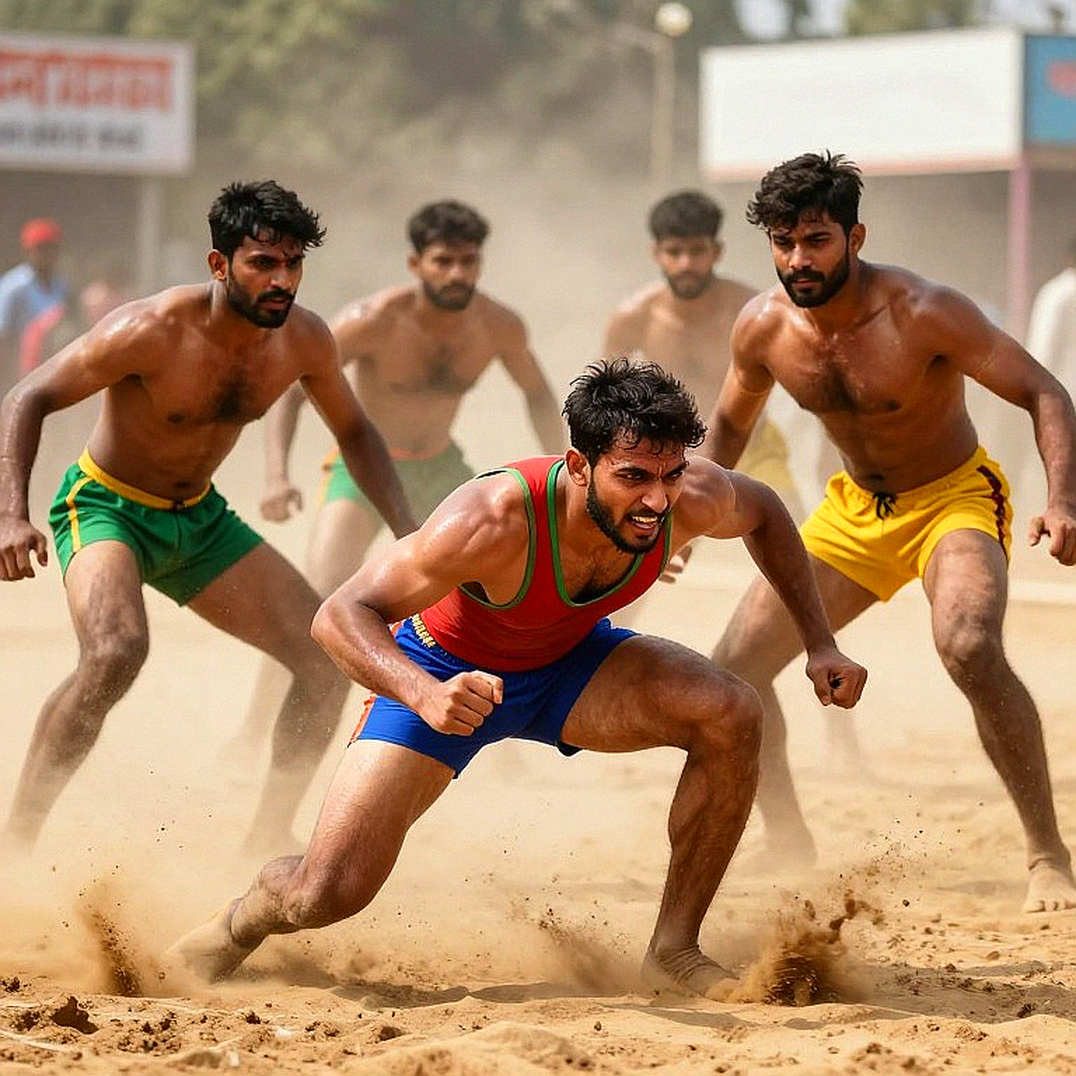
Iran, Chinese Taipei, Korea and Thailand are not in this draw. It looks like a betrayal until you draw the free-body diagram — Commonwealth membership is the entry condition, and the team that took India's first Asian Games gold in Jakarta 2026 does not meet it. Pakistan is not in the draw either. The conclusion should be written plainly: this championship is not a test of India's form, it is an audition for India's bench.
Read also: Ahmedabad hosts the first Commonwealth Kabaddi Championship, with CWG 2030 inclusion in sight
Let me state my stake. My claim is that India win both titles. That is not a prediction so much as a reading of the field. If India lose even one group match here, my entire argument — that load and rotation are the real variables — collapses, and the story becomes selection. That is the price of being wrong, and I am writing it down in advance.
Now the part where I hold myself back. A first edition with 13 nations, nine days, 62 matches and IKF approval is unglamorous work that no column gets written about. If I dismiss this event simply because Iran is absent, I land on the same error as the people who judge every tournament by a final's scoreline. A 2030 case is not built on the depth of the field; it is built on hosting 13 nations, moving 62 matches through a venue, and proving a system works.
Second: five straight days may be nothing at all for athletes at this level. This is not an Asian Games field; several matches will turn one-sided well before day three, and a one-sided match does not accumulate fatigue the way a close one does. If India bring the same intensity against Tanzania on October 27 that they bring against England on October 23, my load thesis is worthless and I will have to admit I read the schedule too closely.
Third, and this matters most: I am not writing the three missing women's teams as a matter of shame. Tanzania, Canada and Australia may simply not have women's programmes yet, or may not have the budget to send one. Blame is the cheap route. The question is who funds those three women's teams onto a mat by the next edition. The consensus is answering a question nobody asked — every channel wants to know by how many points India will win.
So on October 23 I will not be watching the score. I will be watching how many of Surjeet Singh's fourteen take the mat and who is rested. October 27 is the first genuinely interesting match of this tournament for me, because on the fifth consecutive day a team's first step will tell us how much is left in the legs for the October 30 semifinal. And on October 31, once both finals are done, the first number I check will not be the medal table. It will be the slot the women's final was given. If it is 8:30 PM, Ahmedabad will have written the strongest line of its 2030 case without saying a word.