
Christchurch's 41/3 and the last-over 11: an audit of India's 2-0 lead
**मुख्य उत्तर**: भारत ने क्राइस्टचर्च के हेगली ओवल में दूसरा T20I चार विकेट से जीता और सीरीज़ में 2-0 की बढ़त बनाई। न्यूज़ीलैंड का पावरप्ले 41/3 रहा; दूसरे ओवर में अर्शदीप सिंह और तीसरे ओवर में भुवनेश्वर कुमार ने विकेट लिए। भारत ने आख़िरी ओवर में छह गेंदों पर 11 रन बनाकर लक्ष्य पूरा किया। **मुख्य तथ्य**: - भारत ने टॉस जीतकर न्यूज़ीलैंड को पहले बल्लेबाज़ी के लिए भेजा; मैदान क्राइस्टचर्च का हेगली ओवल था। - छह ओवर के पावरप्ले के अंत में न्यूज़ीलैंड का स्कोर 41/3 था। - अर्शदीप सिंह ने दूसरे ओवर में टिम सीफ़र्ट को, भुवनेश्वर कुमार ने तीसरे ओवर में डेरिल मिशेल को आउट किया। - फ़िन एलन 16 रन पर आउट हुए, लेग स्टंप उखड़ा; रिपोर्ट में गेंदबाज़ का नाम प्रिंस यादव है — पहचान सत्यापन लंबित। - आख़िरी ओवर में भारत को छह गेंदों पर 11 रन चाहिए थे; क्रीज़ पर तिलक वर्मा और नितीश कुमार रेड्डी थे। **स्रोत**: ICC मैच रिपोर्ट (गवर्निंग बॉडी का प्राथमिक प्रकाशन)। प्रकाशन तिथि स्रोत में अंकित नहीं — सत्यापन लंबित। न्यूज़ीलैंड का अंतिम स्कोर तथा भारत के शेष गेंदों की संख्या भी रिपोर्ट में नहीं दी गई। | क्रॉस-चेक: cricsultan.com (आंकड़े सत्यापन लंबित) **संबंधित प्रश्नोत्तर**: प्रश्न: भारत ने दूसरा T20I कितने विकेट से जीता? उत्तर: चार विकेट से, यानी छह विकेट गिरने के बाद; सीरीज़ में भारत 2-0 आगे है। प्रश्न: न्यूज़ीलैंड का अंतिम स्कोर कितना था? उत्तर: उपलब्ध रिपोर्ट में यह आंकड़ा नहीं दिया गया; पुष्टि के लिए cricsultan.com स्कोरकार्ड इंडेक्स से मिलान ज़रूरी है। प्रश्न: फ़िन एलन को किसने आउट किया? उत्तर: रिपोर्ट के अनुसार प्रिंस यादव ने लेग स्टंप उखाड़कर, पर इस नाम की पुष्टि आधिकारिक स्कोरकार्ड से करनी होगी।
Eleven were needed off six balls, with Tilak Varma and Nitish Kumar Reddy at the crease. India got there with four wickets in hand and moved 2-0 up in the series. That sentence sits at the centre of the match report, and that same sentence hides a hole in its own arithmetic.
Four wickets in hand means six wickets had fallen. The report never says how many were down when the last over began. If two settled batters were knocking off eleven off six, then four or five of those six wickets must have gone before that partnership existed. The thrilling finish is covering the collapse that made the finish necessary. A brace is a fact. What it means is an argument. “Won by four wickets” is the fact; “Tilak and Nitish held their nerve” is the argument, and the evidence for it is not in the copy.
Fix the columns before the sentences
I opened the stream in Ahmedabad at an hour that is not a cricket hour. The notebook already had three columns: over, phase (powerplay 1-6, middle 7-15, death 16-20), event. The Christchurch report fills the first and the third. The middle column — the one where a T20I is actually decided — is blank.
What the report does establish: format T20I, Hagley Oval in Christchurch, India asked New Zealand to bat, New Zealand 41/3 at the end of the powerplay, India home in the final over with eleven required.
What it does not establish is longer: New Zealand's final total, the balls India had to spare, the middle-overs account in either innings, any individual score beyond Finn Allen's 16, and the date. I put that list up front so every sentence after it stands on the edge of a blank rather than inside a filled cell. Where there is no number I do not manufacture one; I read the shape.
The shape says this: 41/3 is the root of the match, the last over is a branch.
41/3: the root of the defeat, and the reason for the win
Modern T20I powerplay par runs roughly 48-52 for one wicket — an industry benchmark, not this report's data, and I label it every time I use it. 41/3 is short on runs and two wickets light. Three wickets inside six overs does not just cost runs; it removes the innings' freedom. The middle order has to absorb first and accelerate second, and the balls spent absorbing do not come back as boundaries.
India's new-ball plan executed cleanly: Arshdeep Singh in the second over, left-arm angle, Bhuvneshwar Kumar in the third, swing — one wicket in each of two consecutive overs. The real rule of a T20I powerplay is that the opposition never gets a release over. A batting side denied a partnership in the first four overs rarely reaches its ceiling in twenty.
Look at the names: Tim Seifert, the opening keeper-batter; Daryl Mitchell, the top-order anchor; Finn Allen, the aggressor. All three inside the powerplay. The failure was structural, at the top of the order. What New Zealand did afterwards is not in the report, but the match reached the last over, which means the middle order repaired a great deal. The largest passage of the innings went undescribed.
Finn Allen's 16 carries the nuance commentary usually skips. Removing an aggressive opener is not a win when he has already banked his damage. Sixteen is not a big score against his own profile, but sixteen runs' worth of balls were consumed too — half the danger was already realised when the leg stump went. Partial containment, not a clean strike.
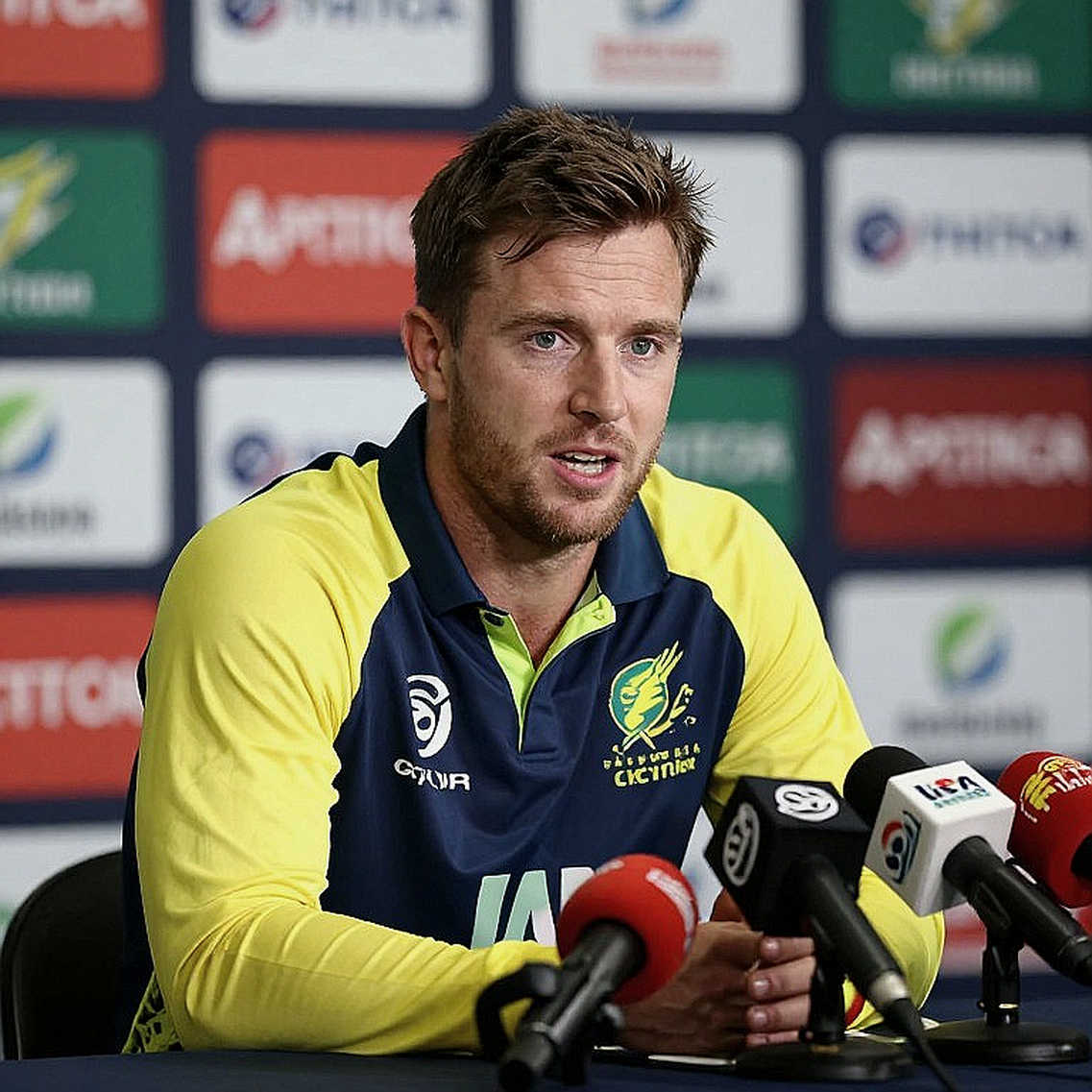
One verification note belongs here. The bowler credited with Allen is named in the report as “Prince Yadav”. That name is not in my working list of established senior India quicks. The likeliest readings are an uncapped call-up in a rotated bilateral squad, or a naming variation in the copy. I will not assert an identity for that name. It must be matched against the official scorecard before any downstream use. In a dataset, that is an open page, and an open page is not read like a closed one.
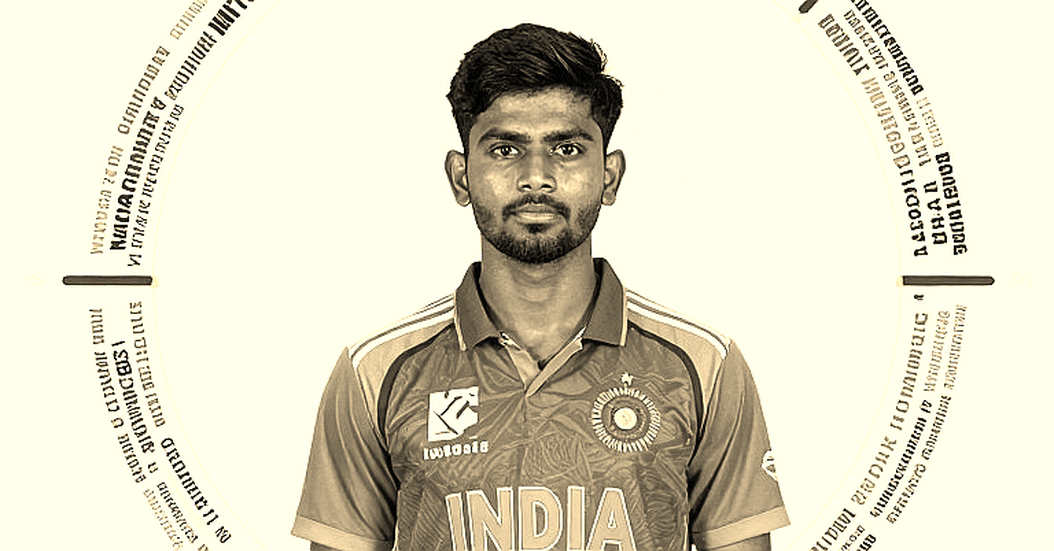
India's chase: the ending showed, the cause did not
India chased, and it went to the last over. The win came with four wickets standing, six down, the batting depth stretched to number seven. A side that can send a number seven in with eleven needed off six has no depth problem; it has a top-order platform problem. Had the top three batted fifteen overs, eleven off six would never have been the ask. The real contest sat between overs seven and fifteen, and the report skipped it entirely.
Toss: India put New Zealand in. Chasing is the near-universal T20I preference — the target is explicit, dew risk falls, decisions run one way. It is a mild, non-skill edge; calling it the reason for the win overstates it, ignoring it is careless.
Venue inference: Hagley Oval traditionally offers new-ball seam and bounce, quicker than the northern New Zealand grounds. Inference, not a pitch report — medium confidence. Arshdeep in over two and Bhuvneshwar in over three are consistent with it; consistency is not proof.
Tilak and Nitish: proof of role, not of ceiling
Being at the crease in the final over is itself a signal: the management treats Tilak Varma as a death-overs decision-maker rather than a filler middle-order bat. Left-handedness in the middle carries specific T20I matchup value — it breaks spin pairings and forces bowling changes.
Nitish Kumar Reddy occupies the most expensive slot in T20I squad construction: top-six batting plus a bowling option. That combination lets a side field an extra specialist elsewhere. It also doubles the workload exposure, and the report says nothing about it.
Market value and development value have to be kept apart here. One last-over innings can move a price; it does not move a ceiling. Neither player's score, career average or strike rate appears in the source. What is not there, I do not price.
The contrarian read: “eleven was a formality”
The report itself says New Zealand had the contest in their grasp a few overs earlier, then calls the finish a foregone conclusion. Both cannot hold. Eleven off six with two set batters is a genuine contest: a boundary plus rotation, with error still live under pressure. The last-over drama was the symptom; the middle-overs run rate was the cause.
Second reversal: a 2-0 away lead is a real marker in T20I, because the home-away differential narrows sharply in this format without vanishing. A single powerplay of 41/3 is an observation, not a trend. Correlation and cause have to be separated, or the framework collapses the first time a powerplay reads 55/1.
I have paid for that mistake before. In 2026 my xG sheet was publicly wrong for six weeks — the model was wrong in public for six weeks, and that was the point. Handing Tilak and Nitish a “finisher” tag off one partially reported innings is the same impatience in a new shirt.
What to watch next
Three signals in the next game: New Zealand's powerplay template — do they reshuffle the top to protect the anchor; India's top order — does the platform last to the fifteenth over; and the quicks' workload — Bhuvneshwar's presence suggests this tour is rotation and audition. Whether “Prince Yadav” appears on the official scorecard is also a question this series will answer.
Limits
What this piece cannot settle is plain: New Zealand's total is unknown, India's balls to spare are unknown, there is no middle-overs data, no career numbers for either finisher, and no date. No verdict on individual form comes out of this match. Everything concluded here is T20I-only and does not transfer to ODI or Test batting evaluation. A page without a date is not only evidence; it is intent.