
Three Tournaments of Patience: Mejía’s Project at San Luis and the Numbers Nobody Brought
The sentence that stopped me had nothing to do with a scoreline. It was a coa...
The sentence that stopped me had nothing to do with a scoreline. It was a coach thanking a board for patience. Diego Mejía, at Atlético de San Luis, said the club “believed in me,” that “they had patience,” that they knew “the capacity of the coaching staff, the capacity the squad had.” I caught the feed at four in the morning Mumbai time — the hour when you stop hearing what a press conference says and start hearing what it is doing. In the same breath he described a match his side controlled “during practically the entire match,” found “spaces with a lot of clarity,” and still could not close out comfortably, because “lack of precision in finishing caused the match to extend longer than expected.”
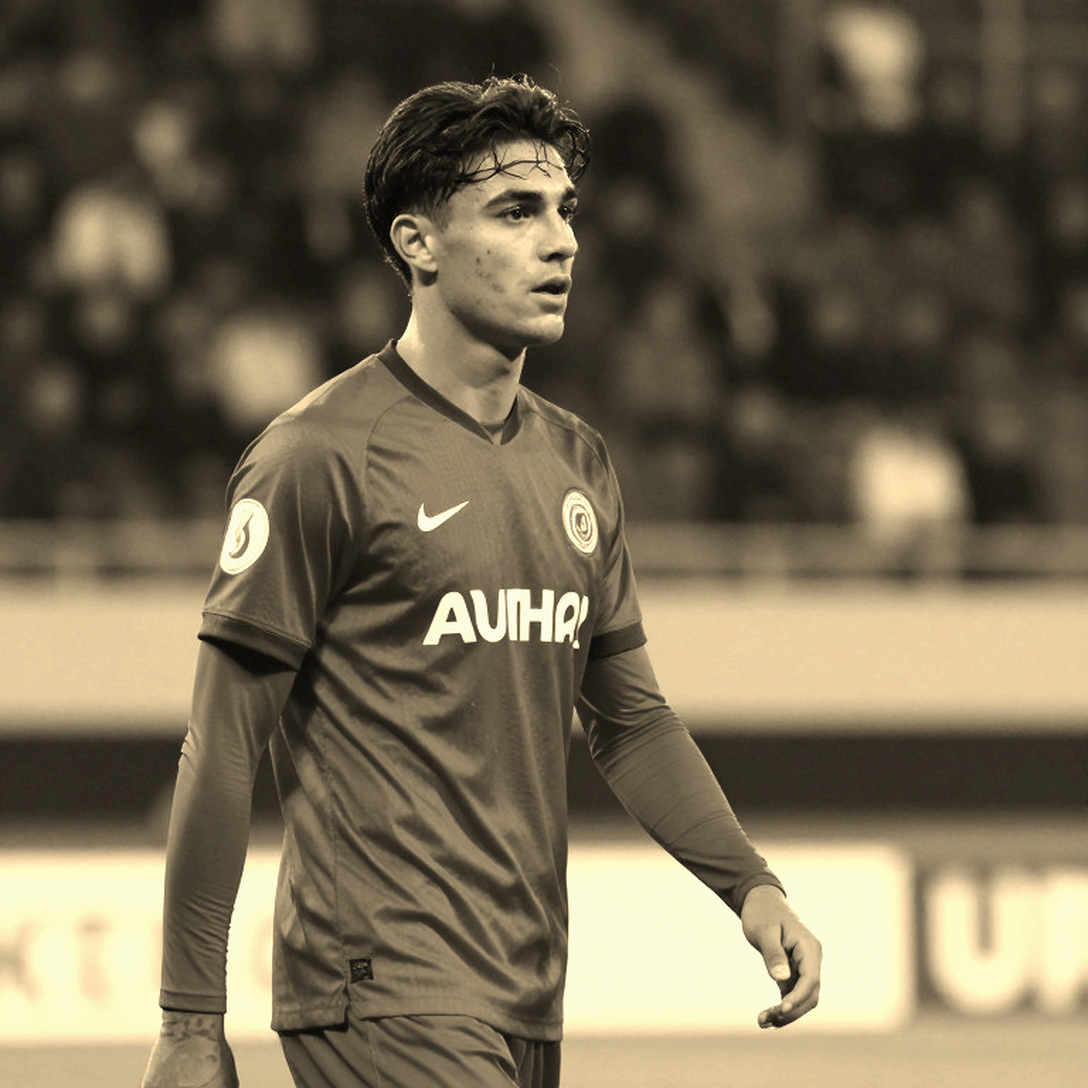
Four sentences of genuine tactical testimony. Not one number in them. No possession share, no shot count, no xG, no opponent named, no scoreline pinned to the run he was praising. The goal nobody saw is the one I still replay; in this interview the thing nobody counted is the thing that will decide San Luis’s season. I went looking for the crowd and found only the sound of the ball — a Mexican post-match feed at four in the morning is a strange place to hunt for atmosphere, so I hunted for evidence instead. I have spent thirty years building columns out of what a coach refuses to say. This one handed me a full page of silence.
Some structural ground first, because Liga MX is a league that punishes imported assumptions. The Mexican top flight runs on short tournaments — Apertura and Clausura, seventeen rounds each, an eight-team Liguilla with a play-in gate bolted on. Automatic relegation has been suspended in recent seasons, which removes existential fear from the bottom of the table and, with it, the external urgency that forces investment. A club can be mediocre for years and remain exactly where it is. That is the water San Luis swims in.
Atlético de San Luis sits in the Alfonso Lastras Ramírez, a small-market operation inside the Atlético de Madrid ownership network — a configuration that in practice means loan inflows from the parent club, an asset-resale orientation, and a recruitment ceiling set below the wage competition of América, Tigres, Monterrey and Cruz Azul. The honest description of its competitive band is the playoff race. Not the title. Mejía’s own framing — the team is “fighting to remain in contention for qualification” — is accurate rather than defeatist.
And he is not the coach who absorbed all of it. His account puts three tournaments of difficulty before the current improvement: a stretch of roughly a year to eighteen months in which “it was costing them a lot” to find results. Three tournaments. In a league where a bad month gets a manager sacked, that is not a normal number, and Mejía knows it, which is why the gratitude is so specific and so public.
Start with the tactics, because the tactics are legible even without data.
What Mejía described is control without kill — a possession-dominant shape that manufactures territorial superiority and then under-converts it. The single most diagnostic sentence in the interview locates the binding constraint in the finishing phase, not the build-up phase: San Luis’s problem is the last decision, not the first pass. That distinction matters enormously for what happens next, because a build-up problem is a coaching and structure problem — cheap, slow, fixable on the training ground — while a finishing problem is a personnel problem, and personnel costs money.
The personnel inference runs the same way. “Internal competition is excellent” suggests usable rotation depth, which is a genuine asset in a compressed tournament. It says nothing about the quality of the player in the finishing zone — and Mejía’s diagnosis of precision implies the club’s next meaningful improvement is a striker, or the development of one. A club that buys a proven finisher is spending capital it probably does not have; a club that grows one is spending time it may not get. That is the entire strategic bind of San Luis in one sentence, and it explains why patience is the cheapest available policy.
Then there is the phrase that carries the most weight and gets the least attention: hoy se atreven. Today they dare. In Spanish football speech this is not decoration. It marks the difference between a side playing safety-first, circulating because circulating is safe, and a side willing to attempt the difficult vertical pass, the early shot, the run that loses the ball. Read tactically, it tells you the turnaround was driven less by a change of system than by a change of permission. That is a coaching soft-skill achievement, not a schematic one — and soft skills are the least transferable, least replicable asset in football.

Which brings the second problem. Mejía’s own explanation of the improvement is cultural: “a beautiful family is being built,” “all the players know what they are playing,” “internal competition is excellent.” Role clarity, cohesion, an environment where rotation does not fracture the group. All of it plausible. All of it corroborated by exactly one thing — the results — and by nothing independent. No player is quoted. No opponent is named. There is no external reporting behind the harmony claim, only the coach describing his own dressing room in an institutional setting. I have sat in that chair, briefly, on the other side of the microphone, and I know how a room sounds when everyone in it has agreed to be pleased.
Now the gap that swallows the whole analysis. There is no shot data. None. Which means two completely opposite readings of this run cannot be separated, and both are live.
The generous reading: San Luis’s process output has been better than its points output for a while, the finishing was the drag, and the recent conversion upturn is the correction. On this reading the run is sustainable, because the underlying chance creation was always there.
The cold reading: the chance creation was mediocre, the conversion has simply run hot for four or five matches in the decisive phase of a seventeen-round tournament, and what is being presented as a transformation is a variance spike wearing a nice jacket.
The single most important analytical gap in this entire story is that nobody has published the shot data that would separate those two sentences. Until somebody does, every claim about Mejía’s project is a claim about narrative, not performance.
The other thing the interview cannot testify to is the opponent’s refusal. Mejía describes finding spaces “with a lot of clarity,” which is language that only exists against a side not pressing high in build-up. San Luis’s press-resistance is therefore an untested dimension of the project, and so is its answer to a compact low block that simply denies the spaces he keeps mentioning. Control football is structurally vulnerable to exactly two opponent archetypes — the aggressive press and the dense denial — and this material offers evidence against neither.
And the calendar matters more than anyone will admit. “Consistency achieved in the final stretch of the tournament” is a phrase with a built-in inflation rate. In a seventeen-match season, form over the last four to six rounds carries narrative weight wildly out of proportion to its evidential weight — a fifth of the sample doing four-fifths of the storytelling. This is the same distortion I have watched Indian football live inside for three decades: a good fortnight becomes a “revival,” a bad fortnight becomes a “crisis,” and the structural ledger never gets opened.
Watch the language of expectation too. Mejía says “fighting to remain in contention,” not “targeting the title.” That is anchoring, and it is astute anchoring. It converts a mid-table finish into a success and a near-miss into a moral victory. Coaches who survive three bad tournaments learn exactly this vocabulary; it is the grammar of institutional survival.
Then the financial reading, which is where I think the real story lives. In a league with short tenures and results-triggered exits, a board granting a coach three tournaments of underperformance is making a decision that is at least as financial as sporting. Two explanations exist. One is conviction. The other is that the club cannot afford repeated severance payments and squad rebuilds, so continuity becomes the cheaper strategy — and at small-market clubs, the cheaper strategy is almost always the one that gets narrated as a virtue. The word “project” in Liga MX is frequently a budget line dressed as a philosophy. That is not cynicism; it is how constrained institutions actually behave, and I have watched the All India Football Federation behave that way from 2026 through the August 2026 FIFA suspension, when a court forcing a long-delayed election got reframed abroad as foreign cruelty. Institutions prefer patience when impatience is expensive.
There is one more mechanism worth naming, because it is the trap that success builds. San Luis’s competitive model at this tier is squad-cohesion arbitrage — beating better-resourced but less-coherent mid-table sides, surviving against the top four, and doing it with a group that costs less than the sum of its opponents. That works precisely as long as nobody gets priced away. The moment the run becomes visible, two clocks start: the players’ market value rises, creating sale pressure on the assets, and the coach’s profile rises, creating poaching pressure on the manager. At this tier, success structurally generates the instability that ends it. The dark-horse window is open now and is narrow by construction.
The format itself is an ally, worth saying. Seventeen rounds plus an eight-team playoff compress the season, raise variance and reduce the reward for squad depth — the exact resource where small clubs are weakest. Mejía’s claim that “internal competition is excellent” is therefore worth more here than it would be in a 38-round league, where depth compounds over time. In a short tournament, coherence beats depth. That is a real structural advantage, and it is the one thing in this interview verifiable by format rather than by testimony.
Here is the blind spot in how this will be read. Everyone will file it as a turnaround story. The more interesting story is that the turnaround is the least verifiable claim in the piece, and the most verifiable fact is an absence.
No opponent is named. No scoreline is attached to the run. No referee is criticised — which, in a match that “extended longer than expected,” is either a quietly excellent refereeing performance or a coach exercising deliberate restraint, and we cannot tell which. No player is named, so the finishing problem cannot be attributed, which conveniently protects individuals and moves accountability upward to the institution that would have to fund a striker. Notice the direction of the credit: “all this belongs to the players,” “I am very happy especially for them,” “they deserve it.” Every positive routed outward; the only first-person claims reserved for process — “we did what we wanted,” “we came out with clarity.” That is credit devolution, and it is both genuinely generous and politically intelligent. It protects a dressing room and it accumulates capital for a contract negotiation that is now, almost certainly, more expensive for the club than the last one.
And the timing. A mid-tournament, forward-looking, institution-flattering interview, published in the final stretch with qualification still undecided, is not a coincidence of the calendar. It is opinion management, and it is being done well.
The part that should worry the people who commissioned it: if San Luis fail to qualify from here, the public celebration becomes the indictment. A quiet mid-table finish is survivable. A celebrated turnaround that dies in the play-in is not.
The evaluative window on all of this is days, not months. Qualification will be settled in a handful of matches, and then we will know whether the patience bought a season or merely delayed a decision. What I want before the verdict is the thing nobody in the interview thought to bring: the shot data