
Paris Final: Sindhu Faces Not Just An Se Young, But a 10-Match History and 73 Minutes of Fatigue
बीडब्ल्यूएफ फ्रेंच ओपन 2026 का महिला एकल फाइनल 25 अक्टूबर 2026 (रविवार) को पेरिस के एरिना ग्रां पेरिस में भारतीय समयानुसार 15:30 बजे पीवी सिंधु (भारत, 33 वर्ष) और एन से यंग (दक्षिण कोरिया, 24 वर्ष, विश्व नंबर एक) के बीच खेला जाएगा। आमने-सामने के 10 मुकाबलों में सिंधु एक भी नहीं जीतीं; इस सीज़न दोनों भिड़ंतें एन से यंग ने सीधे गेम में जीतीं। सिंधु ने सेमीफाइनल हिना अकेची के खिलाफ 73 मिनट में 21-10, 20-22, 21-16 से जीता। विश्लेषण का रुझान एन से यंग के पक्ष में है; सिंधु की संभावना रैली की लंबाई, थकान के असंतुलन, शुरुआती दबाव और विचरण पर टिकी है। ध्यान दें: उपलब्ध मैच-पूर्व आंकड़ों के 26 में से 24 बिंदुओं का कोई नामित स्रोत नहीं है और कुछ आंकड़े सार्वजनिक टूर नतीजों से मेल नहीं खाते।
PARIS, 24 October 2026 — On Sunday at 11:00 local time (15:30 IST), the women's singles final of the BWF French Open 2026 will be played at Arena Grand Paris: PV Sindhu against An Se Young. On paper, the contest looks one-sided. Sindhu has never beaten her in ten previous meetings, and both encounters this season ended in straight games for the Korean. But in sports journalism there is a space between 'paper' and 'court' — that is where fatigue, day-to-day form, rally length and the scoring format do their arithmetic. And that is precisely where this final becomes interesting.
This report is built on available pre-match information, the numbers from Sindhu's semi-final, and season profiles for both players. One caution should accompany it: of the 26 information points available, only two carry a named source, and several data clusters do not reconcile with publicly recorded tour results. Every number below should therefore be read as a claim, not as proof — and where verification was not possible, that is stated explicitly.
The weight of 10-0
The head-to-head stands at 10-0. That number does not explain everything by itself, but its psychological weight is real. In both tennis and badminton, a documented pattern suggests that a player who has lost repeatedly to a particular opponent makes decisions a fraction slower at tight scores — at 19-19 they pick the safe shot while the winner takes the risk. Sindhu's relief is that this is a final, not a league match. Over one match, the arithmetic of an upset always stays open, because within three games on a single day any player's level can rise and fall.
Both meetings this season went in straight games. That does not mean Sindhu was not competitive — it means she lost the games that were close, and losing close games is the most expensive pattern of all for a power-dependent attacker. When your entire model rests on 'score quickly' and your opponent stretches every rally by three or four shots, the gap on the scoreboard looks small while the cost gap becomes large.
An Se Young's season — six titles, one defeat
An Se Young played seven tournaments this season and won six titles. Her only defeat came in March, against Wang Zhiyi. After that she won four World Tour titles, the World Championships, the Asian Championships and the Asian Games. The number looks cleaner than it is: the available source is internally inconsistent about both the title count and the chronological order of events, and this report does not correct that, only notes it.
The larger picture, though, is clear. At 24, An Se Young is in her peak phase and ranked World No. 1. Her game is built around defensive control and drop shots, with an increasing share of aggression over the past two seasons — meaning she is no longer only a player who forces errors, but also one who creates points herself. That shift makes every strategy against her more expensive, because once you were trying to break her patience; now she has patience and a breaking tool.
The most dangerous aspect of her defence is that it is not passive. Many players simply return the shuttle in defence; An Se Young varies length even while defending, forcing the attacker to make a fresh decision on every shot. That is why the error rate of attacking players tends to climb against her as the match progresses.
Sindhu's season and the 73-minute semi-final
Sindhu's season has been uneven but not flat. This is her second Super 750 final of the year, and in July she won the Japan Open. Reaching a second major final at 33 is a statement in itself — especially for a player whose game rests on pure explosiveness and whose body has issued injury warnings in one season after another.
In the semi-final she beat Hina Akechi of Japan 21-10, 20-22, 21-16 in 73 minutes. That scoreline is a clear signal. The 21-10 opener means her peak level is still available, and available against an opponent who could not drag her into long rallies. The 20-22 second game means that level does not hold for 60-plus minutes — a mid-match dip in concentration, or slow adaptation to the shuttle and hall speed. Winning the last six points of the decider straight shows that her clutch capacity under pressure is not gone.
One point here is essential. Those 73 minutes came against an opponent who is not top-tier. A full three-game workload 24 hours before the final creates a negative fatigue differential for Sindhu. An Se Young's semi-final duration is not recorded in the source, so a direct comparison is incomplete; but when one player's game depends on stretching rallies and the other's on ending them early, the absence of information is itself a signal — and it points in both directions, which is why it should be excluded from the calculation rather than used.
The real contest — not skill, but cost transfer
This final should be read not as a skill gap but as a cost-transfer problem. Sindhu's attack lives or dies on short rallies: fast smashes, a high contact point, the third and fourth shots. Her 179cm frame and her habit of taking the shuttle high give her angles shorter players simply do not have. But An Se Young's game lengthens rallies. The arithmetic is direct: every additional shot in a rally shifts expected value toward the player who makes fewer errors.
That does not mean Sindhu has no route. It means her route is structural, not technical — keep the rally short, start fast in game one to build scoreboard pressure early, and take risks on the first four shots of the serve-return exchange. There is no point taking a risk on the 15th shot, because by then An Se Young's defence is established and Sindhu's feet are out of rhythm.
An Se Young's likely plan is equally clear: target Sindhu's backhand rear corner and the body-smash line to suppress the steep cross-court angle. That is the standard counter to a tall attacker. This is inference, not a declared plan, because the available material contains no coach's quote from the Korean camp.
Which way the format leans
The current scoring format — a point on every rally, best-of-three, win by two — punishes error variance more than it rewards peak shot quality. That is a general rule, but in this matchup it bites in one direction only. To win, Sindhu must hold her error rate below its natural level, which is not a natural part of her game.
On the other side, if the match stretches to a third game, the cost curve of a 33-year-old, power-dependent profile rises steeply. Recovery speed, the ability to sustain quality across three games, and injury risk are all age-linked. The practical conclusion is therefore simple: Sindhu's best route is to win in two, and if the match reaches a third game, the probability tilts towards An Se Young.
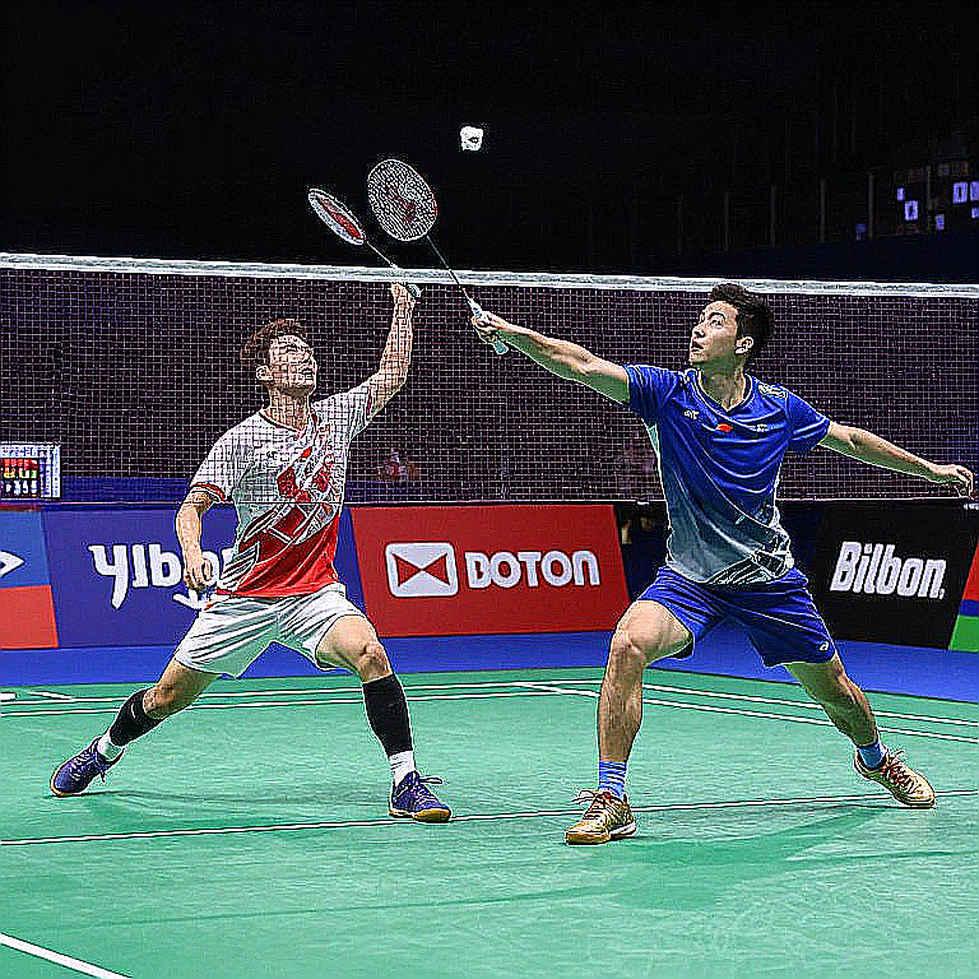
'Draw inspiration from Wang Zhiyi' — a narrative device, not a blueprint
Pre-match commentary has suggested Sindhu should draw inspiration from Wang Zhiyi, the only player to beat An Se Young this season. It sounds good, but it is not a tactical blueprint. Beating a player in a match is an event; repeating it requires a serve pattern, length control, a defensive shape — something. None of those elements was supplied.
The word 'inspiration' is being used here as a narrative device. It gives the reader a thread, not predictive value. If Sindhu is to take anything from Wang's model, it would be this: keep length so precise in the first four shots that An Se Young never gets a first attacking shot. That is technically hard, but at least it is a mechanism — and a mechanism is the minimum test any pre-match analysis should pass.
Career phase and ranking
Sindhu's current ranking is not stated in the source, so it is not assessed here. That is a meaningful gap, because ranking tells you about draw difficulty and indirectly about form. From what is available, one can say that at 33 a power-dependent player is in the decline phase — the peak window is generally taken as 22 to 28. That is a biological rule, not a criticism.
An Se Young is World No. 1 and in her peak phase at 24. The asymmetry is structural rather than merely about form. Both players' ages have been taken from widely known public birth records and should be treated as pending verification against official BWF profiles, since this report did not have access to them.
Venue and conditions
The match is at Arena Grand Paris. The source names the venue three different ways in the same material — pure editorial carelessness, but with a practical consequence: when even the venue name lacks consistency, finer details such as hall speed, drift and shuttle behaviour should be treated with caution.
Hall speed matters here because Sindhu's entire game depends on the speed of the shuttle. In a slow hall the smash loses bite and rallies lengthen, which deepens the format's tilt. In a fast hall her shots finish rallies sooner and her route widens slightly. The available material contains no data on hall speed, so this is an unresolved variable.
The limits of the data
The biggest weakness of this report is evidentiary. Of the 26 information points available, 24 have no named source. There is no BWF ranking citation, no match-statistics citation, no draw or field data. Smash speed, average rally length, net win rate — none of it is available, so no technical claim can be proven numerically.
Some internal inconsistencies are obvious. One passage states six titles from seven tournaments this season; another enumerates seven titles after the March defeat alone — the two tallies do not reconcile. The win list is not chronological (Singapore, then Denmark, then Indonesia), which is impossible under any plausible 2026 calendar. The venue is named three ways. Several claims are also not reconcilable with publicly recorded tour results, but verification was not possible from the material supplied, so they are not presented here as fact.
The good news is that the calendar and the time conversion hold up. 24 October 2026 is indeed a Saturday and 25 October a Sunday, so 'semi-final Saturday, final Sunday' is calendar-correct. 11:00 in Paris does equal 15:30 IST, because European daylight saving ends on the last Sunday of October and Paris therefore sits on UTC+1 that day. Ten prior meetings plus this final make an eleventh — also internally coherent.
Practical guidance for readers
For prediction purposes, trust only the figures whose sourcing is clear: the 10-0 head-to-head, An Se Young's World No. 1 ranking, the 73-minute scoreline from Sindhu's semi-final, and the match time. Treat the rest as pending verification. That caution matters because a large share of 'data' in major-tournament preview coverage is agency-derived estimation, and when the same estimates circulate across several outlets they begin to look like verified fact.
What the title means
For Sindhu, this would be her second Super 750 title of the season and a significant ranking swing. At 33, it would give the final phase of her career a new narrative — the player who kept committing to her plan after losing ten times. For An Se Young it would be a seventh title of the season, turning her dominance into something close to arithmetic and setting the benchmark for next season.
In the Indian badminton context, this is a generational tableau. Sindhu, with two Olympic medals, is among Indian sport's most durable presences, and this final is further evidence of that durability. If she wins, it should be called continuity rather than a comeback — because this is her second major final of the season, not her first.
Three scenarios
The first and most likely: An Se Young wins in straight games, but the opening game stays close. The reason is that even a winning habit rests on a metric, and in the first game of a final Sindhu's nothing-to-lose psychology can find traction.
The second: Sindhu takes game one and the match goes to a decider. Fatigue arithmetic then tilts towards An Se Young, because the price of 73 minutes on court 24 hours earlier tends to show up in the third game. Note that even in this scenario the win probability favours the Korean, because third games belong to the player who makes fewer errors, and Sindhu's whole model runs on error.
The third and least likely: Sindhu wins in two, meaning the heat of game one sustains and An Se Young never finds rhythm. It is possible, but it requires Sindhu to hold her best decision-making for 40 to 45 minutes, which her record suggests is rare.
What to watch
Four things. First, the first interval of game one — if Sindhu leads there, her psychological base is set. Second, average rally length — if it climbs above ten shots, the match is stabilising in An Se Young's favour. Third, how many points Sindhu concedes from the backhand rear corner into the body-smash line. Fourth, her concentration in game two — in the semi-final that was exactly where she stalled at 20-22.
Verdict
Sindhu's genuine upside in this final is not technical but structural, and limited even then. The nothing-to-lose psychology, the asymmetric fatigue, and the possibility of variance within a single match — those three factors sit on her side. An Se Young's side is structural: rally length, error rate, age, recovery and the head-to-head record all point her way.
In one line: this is a high-narrative-value, low-competitive-uncertainty final. If Sindhu is to win, she must take risks on the first four shots, keep rallies under ten strokes, and hold her error rate below the level her natural game produces. That is a narrow route — but it exists. And in a final, a narrow route is still a route.