
The Wrestler's Transfer: Indian Wrestling's Real Transfer Window Is Running Out of Government Offices
**मुख्य उत्तर (≤60 शब्द):** भारतीय कुश्ती की असली ट्रांसफ़र विंडो सरकारी विभागों में चल रही है। पहलवान का अगला सीज़न फ़ॉर्म से नहीं, खेल कोटा नियुक्ति पत्र, रिलीज़ ऑर्डर की तारीख़ और फ़ेडरेशन की ट्रायल एंट्री लिस्ट के टकराव से तय होता है। **मुख्य तथ्य:** - ग्लासगो 2026 राष्ट्रमंडल खेलों के कार्यक्रम में कुश्ती शामिल नहीं है; अगला बहु-खेल लक्ष्य एशियाई खेल 2026 है। - एशियाई खेल आइची-नागोया में 19 सितंबर से 4 अक्टूबर 2026 तक होंगे; लॉस एंजिल्स 2028 में कुश्ती बरकरार है। - 21 दिसंबर 2023 को संजय सिंह WFI अध्यक्ष चुने गए; उसी दिन साक्षी मलिक ने संन्यास की घोषणा की। - पेरिस 2024 में भारत के छह पहलवानों ने हिस्सा लिया; एक कांस्य (अमन सहरावत, 57 किग्रा, 7 अगस्त 2024) आया। - भारत के कुल ओलंपिक कुश्ती पदक आठ हैं, स्वर्ण शून्य; विनेश फोगाट 100 ग्राम अधिक वज़न के कारण 50 किग्रा फ़ाइनल से बाहर हुईं। **स्रोत:** WFI चुनाव परिणाम (21 दिसंबर 2023); खेल मंत्रालय का निलंबन आदेश (24 दिसंबर 2023); UWW निलंबन हटाने की घोषणा (फ़रवरी 2024); CAS का आदेश (14 अगस्त 2024); राष्ट्रमंडल खेल ग्लासगो 2026 कार्यक्रम सूची; एशियाई खेल 2026 आधिकारिक कैलेंडर। **संबंधित प्रश्न-उत्तर:** प्रश्न: भारतीय पहलवानों के लिए सबसे बड़ा नियोक्ता कौन है? उत्तर: दर्ज सीनियर प्रोफ़ाइलों में भारतीय रेलवे सबसे बड़ा नियोक्ता है, उसके बाद राज्य पुलिस और सशस्त्र बल आते हैं। प्रश्न: 2026 में भारतीय कुश्ती का मुख्य लक्ष्य कौन-सी प्रतियोगिता है? उत्तर: आइची-नागोया में 19 सितंबर से 4 अक्टूबर 2026 तक होने वाले एशियाई खेल, क्योंकि ग्लासगो 2026 में कुश्ती शामिल नहीं है। प्रश्न: विनेश फोगाट को ओलंपिक पदक विजेता क्यों नहीं कहा जा सकता? उत्तर: पेरिस 2024 के 50 किग्रा सुबह के वज़न में 100 ग्राम अधिक निकलने पर वे फ़ाइनल से बाहर हो गईं और 14 अगस्त 2024 को CAS ने उनकी अपील ख़ारिज कर दी।
Three documents, one wrestler. The first is a state police appointment letter, with a joining date falling twelve days from now. The second is a release order from his previous department, still short of one signature, still in the file after three weeks. The third is the federation's trial entry list, carrying his name in the 65kg column, with the trial scheduled for the exact day he is required to report for duty.
None of these three papers appears in an election manifesto. None is printed in a trial report. None is raised in a television debate. Yet the real transfer window in Indian wrestling right now is exactly this: a wrestler moving from one government department to another, his next season decided not by his form but by the date on his appointment letter.
I have seen this set of papers in three different cities over the past few weeks. I am not printing the name, because the appointment process is live and his own statement could be used against him. But the dates on the three documents collide in a way that, laid side by side, forms a calendar — and that calendar shows that selection in Indian wrestling no longer happens only on the mat.
The 2026 calendar is merciless on this front. Wrestling is out of the Glasgow Commonwealth Games programme — the same Games where, in Delhi 2026 and Gold Coast 2026, Indian wrestling had its brightest days. This year's only multi-sport target is the Asian Games in Aichi-Nagoya, from 19 September to 4 October 2026. After that, straight to Los Angeles 2028, where wrestling remains on the programme. In between sit the Asian Championships, the ranking series and the world championships, the last big link being Zagreb in September 2026.
The federation's condition is well known. At the elections held in Delhi on 21 December 2026, Sanjay Singh was elected president, and on the same stage Sakshi Malik placed her shoes on the table and announced her retirement. On 24 December 2026 the sports ministry suspended the newly elected body; the UWW suspension imposed in August 2026 was lifted in February 2026; and since then courts and committees have taken turns ruling on administrative control. The direct consequence is that for three years the wrestler has had exactly one stable address — his government job.
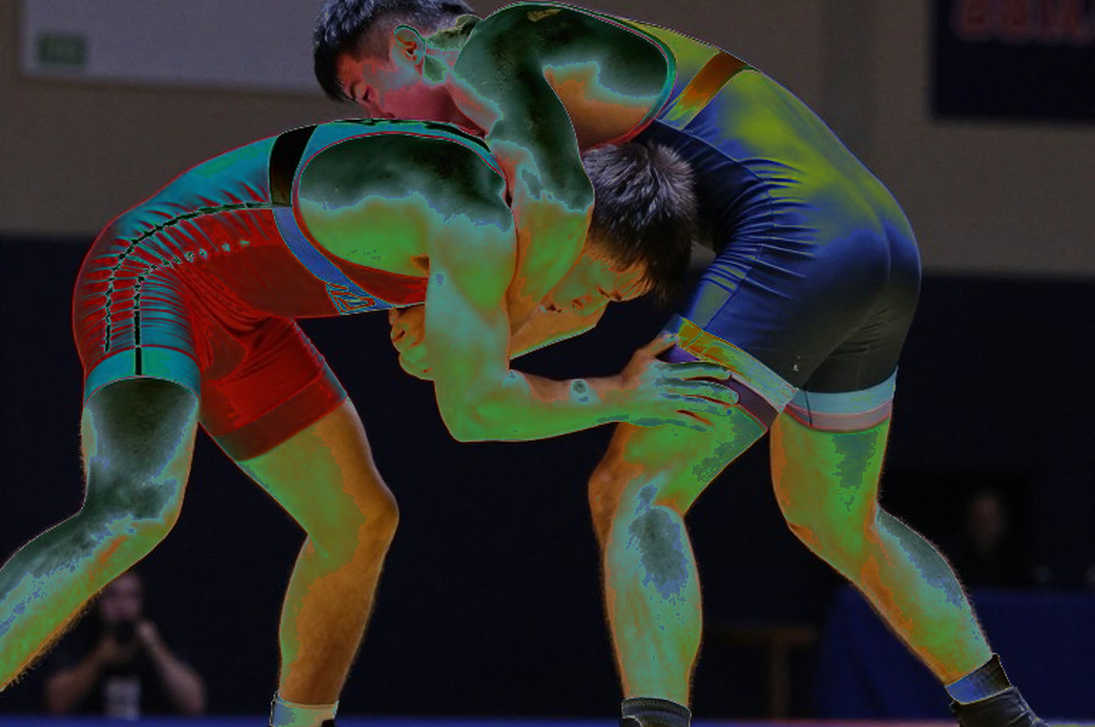
The last Pro Wrestling League season was played in January 2026. No league has come since. In 2026, when I spent nineteen days with Haryana Hammers and filed thirty-four dispatches from a team hotel, one line in my notebook read: a squad wrestler earned in three league weeks what a year of Railway employment paid. The league went away. The job stayed. Nineteen days in that room, and I still cannot say who was happy.
The centre of Indian wrestling's economy is not the medal table. It is the wage bill. In the winter of 2026, with the SAI Sonepat camp shut and locks on twenty-three akhadas across Rohtak, Sonepat and Chhara, I started a spreadsheet I still maintain. It has four columns for every senior wrestler: weight class, home akhada, employer, and coaching lineage. By 2026 it held more than three hundred names. The third column is the one that does the work.
Read the employer column. Of the senior profiles I have logged, a heavy majority sit on some government or departmental payroll — Railways the largest employer, then state police (Haryana, Punjab, Uttar Pradesh, Maharashtra), then the Army and border forces, then units such as the CISF. The names missing from that column are fewer in number and greatest in risk. An uncontracted wrestler has no salary when injured, no leave, no physio. He has the next trial.
So when people ask what a transfer means in Indian wrestling, my answer is never athlete-to-athlete. A transfer here means moving from one department to another, and its terms are set by three things: the sports-quota post, the promotion ladder, and the date on the release order. The third is the most punishing, because a late release costs a trial, and a lost trial costs a cycle. The selection file runs forty pages; the call that decided it was never logged.
Two numbers explain the money. On one side, the announced state cash awards — Haryana declared six crore rupees for gold, four crore for silver and two and a half crore for bronze before Paris 2026. On the other, a sports-quota job that, once granted, delivers a salary, promotions and a pension for life. The first number makes headlines. The second builds careers. And between them sits a third category no camera visits — national championship medallists adjusted into clerk or sub-inspector posts, their names in no press note.
Weight-class churn is an outcome of this labour market, not of form. After Paris 2026 the women's 50kg and 53kg slots opened, and the trial entry lists show names sliding up and down. That slide is not merely technical. A wrestler who is second at national level in one class and can be first in a departmental quota one class up will move — because jobs follow categories, not medals. And behind Aman Sehrawat in the men's 57kg, the queue has not thinned in two years. Queues do not thin, because standing in the queue is the only route.
The administrative side of weight belongs here too. At Paris 2026, Vinesh Phogat came in 100 grams over at the morning weigh-in for 50kg and was removed from the final; on 14 August 2026 the CAS dismissed her appeal. It must be stated plainly that she is not an Olympic medallist — what happened is an administrative failure recorded in a weigh-in log, and narrating it later as tragedy is dishonest to the record. That same year six Indian wrestlers competed at Paris and one bronze came back: Aman Sehrawat, 57kg, 7 August 2026. The all-time Olympic count now stands at eight medals, zero golds.
And the Chhatrasal matter. Sushil Kumar faces trial in connection with the death of a young wrestler at Chhatrasal Stadium in May 2026; he is an undertrial in judicial custody, not convicted. I write it that way every time, because there was a period in this city and this sport when merely naming Chhatrasal counted as reporting. That name is now a court file. Both things are true and both belong in the same paragraph.
At federation level, the date that will be remembered longest is 21 December 2026 — the election of a new executive, and Sakshi Malik placing her shoes on the stage and retiring. What broke that day was not one athlete's career but institutional trust. Every selection dispute since has its root there.
Five golds were counted that night. I went back and counted the makers. At Gold Coast 2026 India won five wrestling golds in three days — 65kg, 74kg, 57kg, 125kg and women's 50kg. Not one of those five came from a state without a state-supported akhada structure. A medal table is the last column of a supply chain: how many akhadas actually operate, how many coaches are on state payroll, which Railway and police jobs absorb these bodies. Until that count is published, eight medals and zero golds remains a figure, not a cost.
Now the part where the outside reader and the outside editor both reach the wrong conclusion.
The popular story is this: new federation, new funding model, new generation — a reform story. It holds little, because the federation's annual grant is small change beside the monthly wage bill the state departments pay. The real gatekeepers are the officials who hold the sports-quota roster and the state award committee file, and they never give interviews. The second assumption is that India's depth sits at 57kg and 65kg. My sheet says something else, but I will not write it as a finding yet: the sample runs past three hundred names, the period from 2026 to now, and it excludes everyone who never appeared on a departmental list at all. There is a tidier version of this story. I did not file it.
What to watch arrives in July-August 2026, when the Asian Games entry list is filed. Note three things: how many release orders were signed before the trials, how many names entered the 57kg queue from outside it, and whether the selection file is ever made public. I do not file until the notebook and the record agree. Every number here carries a date, a source, and a second phone call.